

What makes Kwakta Lamjel truly remarkable is its authorship. In contrast to folk songs like Chingda Satpi Engellei, which are collective and anonymous, this song has a known composer. And yet, because it draws so deeply from the idioms of Pena Eshei, it is already embraced as part of Manipur’s folk tradition.
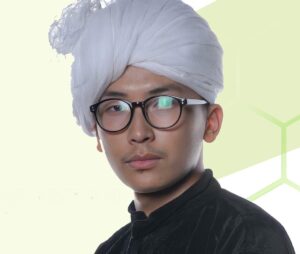
By Marjing Mayanglambam
In the contemporary world, where speed, brevity, and time limits dictate so much of our daily lives, I have often wondered how our traditions adapt themselves. We live in an era where patience is tested, and where the long, slow, deliberate processes of storytelling may seem almost out of place. It was in this context that I witnessed my father, Oja Mayanglambam Mangangsana’s bold and innovative attempt to reshape the tradition of Pena Eshei, by condensing the vast narratives, which once unfolded over days, into shorter compositions of about 10–15 minutes. To many, such shortening may appear like a compromise, but to me, it feels like a philosophical response: traditions survive not by remaining fixed, but by transforming themselves to suit the rhythm of each generation.
I was told by elders that Pena performances in earlier times stretched across nights and days, where audiences would gather, listen, reflect, and participate in the communal spirit of storytelling. The epic of Khamba Thoibi, for instance, was never just entertainment. It was a classroom of its own, an oral archive where lessons of ethics, love, courage, and fate were passed down. When I think of it, I see oral narratives as rivers, flowing endlessly, carrying wisdom from the past into the present. Oja Mangangsana’s effort to compress these long stretches into shorter performances is like channeling that river into a smaller stream, ensuring that its waters still reach us today, even if in a different form.
One such stream is the song Kwakta Lamjel (The Marathon of Kwakta), which Oja Mangangsana created in 2013. I still remember how he mentioned being inspired by his own Oja, Thongam Thoiba. He also consulted Hijam Anganghal’s monumental Khamba Thoibi Seireng, a literary masterpiece, and wove elements of Pena Eshei into this new composition. In doing so, he not only remembered his Oja’s teachings but also carried them forward, like a torch that refuses to go dim. I often think, is not every act of artistic creation an act of remembrance? We remember not only the stories themselves, but also the hands that guided us, the voices that instructed us, and the silences that shaped us.
The birth of Kwakta Lamjel was also tied to pedagogy. It became part of the teaching material for Laihui Ensemble’s Play Pena Class. With the old GuruShishya Parampara largely fading away, Oja Mangangsana had to invent new methods to pass on the tradition to younger learners. He believed, and I agree that without simplification, without finding new ways to make the music approachable, we risk losing the art form to history. I sometimes ask myself: is tradition more authentic when it remains unchanged, or is it more alive when it bends to nurture the future?
The song itself retells a moment from the Moirang legend. It narrates the marathon between two divisions of the kingdom: Khunthak Pana, represented by Khamba, and Khunkha Pana, represented by Nongban. The race was not a fair one, Nongban plotted obstacles to ensure his victory and to claim Princess Thoibi. Khamba, however, endured, supported emotionally by his sister and friends. In the end, both reached the goal at the same time, touching the sacred animal (bull), Khamba its horns, Nongban its hind leg. The irony of this conclusion still lingers in my mind. Perhaps the story reminds us that truth and justice do not always emerge in neat, victorious clarity. Sometimes, like life itself, they arrive in paradoxes.
But beyond the narrative, what makes Kwakta Lamjel truly remarkable is its authorship. In contrast to folk songs like Chingda Satpi Engellei, which are collective and anonymous, this song has a known composer. And yet, because it draws so deeply from the idioms of Pena Eshei, it is already embraced as part of Manipur’s folk tradition. I see in this a profound truth, authorship may be personal, but tradition is communal.
A song may begin with an individual, but once it enters the cultural bloodstream, it belongs to everyone. I must also reflect on something that troubles me, the way many contemporary performers approach sacred traditions. Too often, I see Lai Haraoba songs, which carry deep spiritual meaning for villages and communities, being used casually, without respect for their context. The same danger exists for Pena Eshei. To treat these songs as mere performance pieces for personal fame is
to strip them of their soul. As I write this, I remind myself, that respect and acknowledgment are not just optional, but they are the very conditions of safeguarding heritage. Just as a child must honor their parents, an artist must honor their tradition & Oja.
Looking ahead, I believe Kwakta Lamjel will grow beyond its current circles. One day, it may be sung by people who never knew its author, just as the “Happy Birthday” song, composed by Patty and Mildred Hill in 1893, became a universal tune, detached from its origins. Yet, to me, knowing the history of a song, its struggles, its creator, and its journey only makes it more valuable. Without memory, tradition becomes hollow performance and with memory, it becomes heritage.
In writing this reflection, I realize that every act of preserving folk music is also an act of philosophy. It is about asking, how do we live with the past in the present? How do we honor what is old while speaking to what is new? And perhaps most importantly, how do we ensure that our cultural identity is not just archived in museums, but breathed, sung, and lived by the next generation?
The story of Kwakta Lamjel is not just about a song. It is about the timeless dialogue between tradition and change, between remembering and reimagining, between the Oja and the disciple. And in that dialogue, I find not only the sound of the Pena, but also the heartbeat of our collective identity.
(Marjing Mayanglambam is currently pursuing M.A. Folklore & Culture Studies. He is also a Pena Artiste & Researcher, Laihui Ensemble)