

While celebrating a hundred years of theatrical achievement, it is crucial to remain critically engaged—recognising the power of theatre to shape collective memory and the responsibility to present history with honesty and nuance.
By Usham Rojio
The Critics Forum Manipur commemorated the centenary of Modern Manipuri Drama with the inaugural restaging of the seminal modern proscenium production, Narsingh: Awa-Ngamba (Narasingh: The Vanquisher of Ava). This historic event on September 30, 2025, honoured a century of rich proscenium tradition. Alongside the performance, the scholarly community contributed significantly through the release of Liksari (The Act of Transfer), Vol. 2 & 3, No. 1. Published by Critics Forum Manipur under Chief Editor Dr. Nongthombam Premchand, this journal is a deliberate effort to critically examine the region’s theatrical heritage. Liksari functions as more than an academic publication—it is a vital act of cultural transfer, exploring how Manipuri traditions have been transmitted across generations, transformed through socio-political contexts, and reinterpreted in contemporary times. Its name signals its core focus: the ongoing process of cultural and artistic exchange that sustains and reshapes Manipuri theatre.
Under a talented editorial team, the journal offers a diverse array of essays, short plays, analyses, and scholarly reflections. These contributions delve into traditional folk forms, modern experiments, and the intersections of history, identity, and performance. The timing of Liksari’s publication alongside the centenary underscores the importance of scholarly inquiry in understanding the performative acts that have defined Manipuri theatre. Led by Dr. Premchand, a scholar deeply engaged with Manipuri performing arts, Liksari embodies the intellectual vigour and cultural consciousness the Critics Forum promotes. Its pages foster a dialogue between artists and academics, practitioners and audiences.
Dramaturgy of Evolution: Narsingh–Awa-Ngamba as Foundational Text
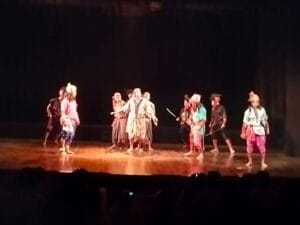
Written by the late Shri Lairenmayum Ibungohal (1895-1966) in 1922 while he was a law student, Narsingh: Awa-Ngamba symbolises the evolution of Manipuri theatre into modern forms. Generously produced by the People’s Arts & Dramatic Association (PADA), the production featured a talented ensemble of nearly 45 artistes and was skilfully directed by Laishram Randhoni, one of Manipur’s leading women directors. This celebration marked 100 years of Manipuri proscenium theatre, highlighting its vibrant creative spirit and cultural resilience. The staging was not merely a performance but a cultural event aimed at reconnecting contemporary audiences with their historical roots. It marked a centenary not just of a play but of a cultural renaissance—an assertion that Manipuri theatre is an ongoing story of resistance, revival, and reinvention.
While Manipur boasts a rich tradition of folk theatre and a history of Bengali plays performed in the region, Narsingh: Awa-Ngamba holds a special place. It is recognised as the first play originally written in Manipuri for the proscenium stage, a significant milestone. Its inaugural performance was on September 30th, 1925, on a makeshift proscenium stage at the Govindajee Mandap within the Palace compound in Imphal. This historic event, under the royal patronage of Sir Churachand Maharaja, coincided with the centenary of Manipur’s liberation from Burmese rule in 1825, marking the end of the Seven Years’ Devastation. The performance symbolised a new era, blending historical themes with modern staging techniques and reflecting the region’s resilience and cultural pride. The play included real weapons, traditional costumes, and dramatic battle scenes, carrying a strong patriotic message.
The playwright vividly depicts the significant transformations within Manipuri society brought about by political instability, succession struggles, and internal dissent. Set against the backdrop of war and upheaval, the play dramatises the resistance efforts that culminated in the victory at Ango Ching and the symbolic act of Gambhir Singh washing his blood-stained sword, Brajasingh, in the Ningthee River—a powerful emblem of liberation. It underscores themes of patriotism, resilience, and collective memory.
The play highlights the heroic deeds of the two brothers, Gambhir Singh and Narsingh, who fought to free Manipur from tyranny. Their valour and sacrifice symbolise the national struggle for independence and justice. A notable historical scene is the finale, where Gambhir Singh washes his blood-stained sword, Brajasing, in the Ningthee River, embodying his victorious spirit and unwavering commitment to liberation. The play portrays these incidents within the social context and values of that era, emphasising patriotism, sacrifice, and societal resilience.
Dramaturgical Analysis: Staging the Resistance
The scene opens in Cachar, where Marjit seeks assistance from his elder brother Chourjit. Subsequently, Gambhir Singh and Narsingh make their entrance. An intense verbal confrontation ensues between Gambhir Singh and Marjit, reflecting the mounting tensions and divergent perspectives within the resistance. Demonstrating heroism and solidarity, Narsingh swiftly aligns himself with Gambhir Singh. Chourjit, expressing his unwavering confidence, formally entrusts them with his sacred sword, Brajasingh, as a profound symbol of trust and collective commitment. In a ceremonial act, he presents his coronation sword, instructing them to purify it in the waters of the Ningthee River (Chindwin River), signifying the consecration of their martial determination and embodying the collective hope for triumph.
Simultaneously, Gambhir Singh and Narsingh mobilise their forces, assembling a contingent of approximately five hundred Manipuri soldiers. These troops receive rigorous military training in firearms under the auspices of the East India Company in Sylhet. Their armament includes muskets, bombs, guns, artillery, and ample gunpowder, reflecting a strategic enhancement of their capabilities. The forces achieve an initial victory by overcoming a heavily fortified Burmese stronghold on Tilian Mountain in Cachar.
Following their regrouping in Sylhet, the army advances toward the Manipur valley. The arduous journey spans seventeen days on foot, involving traversal across rugged mountain ranges and rivers, such as the Izei and Barak, both in spate due to monsoon conditions. The soldiers construct temporary bridges by felling trees. Despite the lack of proper sustenance and rest, their relentless determination is driven by an unwavering desire to reclaim their homeland. On June 10, 1825, they finally arrived at Maklang. Exhausted and hungry, the soldiers resort to begging for rice from local villagers, who, despite their poverty, offer whatever assistance they can—highlighting the collective spirit and solidarity of the community.
Following Gambhir Singh’s advice, Narsingh, the General, gathers intelligence on the Burmese fortifications nearby. Disguised as civilians, his men scout the area, successfully identifying camps at Nambol, Mayang Keinou, and Langthabal. In a coordinated assault, his forces storm these camps simultaneously, resulting in the death of over 300 Burmese soldiers. After regrouping, they prepare to attack the larger fortification at Kakching. Meanwhile, Khumbong reports that the Burmese have abandoned their headquarters at Manung Kangjeibung in the Kangla, where they had been stationed for seven years. He also reveals that the last Meetei king installed by the Burmese, 71-year-old Nongchup Lamkai Ngamba, alias Bhadra Singh, has fled to Kabo (Burma). Khumbong describes the Kangla as deserted and in a state of neglect, emphasising the extent of the Burmese retreat.
The Kangla, now abandoned and forlorn, deeply shattered the hearts of all the Manipuris. In their despair, they beseeched Gambhir Singh and Narsingh to proceed to Kangla and assume leadership immediately. Responding to the call, Gambhir Singh arrived and was crowned as the King, with Narsingh appointed as the Senapati (Commander). Joy and relief spread among the people, and those who had fled began to return. However, despite this victory, Gambhir Singh and Narsingh remained uneasy. Intelligence indicated that Burmese soldiers continued to linger within Manipur’s soil, with formidable fortifications at Tamu and along the Ango Ching, suggesting the struggle was far from over.
King Gambhir Singh, accompanied by Narsingh, set out for Kyampok Lamjao (Kabow Valley) to confront the remaining Burmese fortifications. Using strategic tactics, they surrounded the Burmese at Tamu, cutting off supplies and starving them. Under the cover of darkness, the Burmese forces fled. During this operation, they liberated Meetei captives and seized a large cache of firearms. The final and decisive battle took place on the mountain of Ango Ching, where they confronted and ultimately defeated the Burmese soldiers. Following this victory, both sides agreed to a peace settlement: the Ningthee River would serve as the boundary between Manipur and Burma.
The play concludes with Gambhir Singh and Narsingh fulfilling the pledge of Chourjit by purifying the sacred coronation sword, Brajasing, in the waters of the Ningthee River, symbolising victorious unification and peace. This act marks the end of their struggles and the beginning of a new era.
Performing History: Narrative, Memory, and Myth-Making
While the play’s historicity is undeniable, it also raises profound questions about how history is performed. Theatre is inherently a selective medium—an act of storytelling that shapes perceptions, emphasises certain narratives, and omits others. In Narsingh: Awa-Ngamba, the dramatisation of the liberation struggle is imbued with a patriotic fervour that elevates heroic figures to mythic status. Their valour is celebrated, their sacrifices immortalised, and their stories become central to Manipuri national identity. This prompts critical reflection: does such heroic storytelling simplify complex historical realities? Are the nuances of internal dissent, colonial influence, and socio-economic factors adequately represented, or are they filtered through a nationalist lens that glorifies heroism above all?
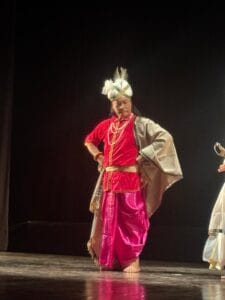
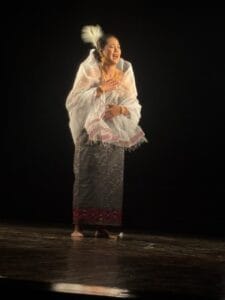
Moreover, the staging choices—weapons, traditional costumes, and battle scenes—reinforce a romanticised, almost mythic version of history. While these elements captivate audiences and foster cultural pride, they also risk perpetuating a simplified, idealised version of the past that may overlook inherent ambiguities and contradictions. This tension between history as lived experience and history as performed narrative is central to the theatrical act. Theatre becomes a space where history is not just retold but reimagined—sometimes glorified, sometimes questioned. In the Manipuri context, this process takes on additional significance given the region’s complex history of colonisation, resistance, and cultural resilience.
Centenary as Critique: Interrogating the Narrative
The centenary celebration exemplifies both pride and critique. Celebrations like the staging of Narsingh honour cultural achievements, but they also invite scrutiny of how history is shaped and presented. It is essential to acknowledge that theatrical performances, particularly those grounded in national or regional history, are inherently performative acts. They are not neutral reproductions but creative interpretations that reflect contemporary values, identities, and political contexts. As such, they serve as both commemorations and commentaries.
In the context of Manipuri theatre, this means acknowledging the role of performance in constructing a collective memory that can inspire pride and unity, but also recognising the potential for oversimplification or distortion. For instance, while Narsingh vividly depicts the heroism of Gambhir Singh and Narsingh, it might underplay the complexities of the period—such as internal dissent, colonial interventions, or socio-economic struggles—that also shaped Manipuri history.
Theatre as Historical Consciousness
Theatre’s unique ability to blend storytelling, visual spectacle, and emotional engagement makes it a powerful tool for shaping historical consciousness. It transforms facts into compelling narratives, making history accessible and emotionally resonant. In Manipuri theatre’s evolution over the past century, this has meant a continuous negotiation between tradition and modernity, myth and fact. The early plays drew heavily on folk and traditional themes, while later works incorporated modern staging techniques and historical narratives. This dynamic reflects the community’s desire to preserve its cultural identity while engaging with contemporary artistic expressions.
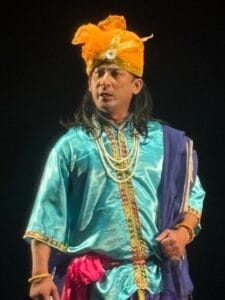
The recent centenary celebrations, particularly the staging of Narsingh, exemplify this ongoing process. They demonstrate how theatre has become a vital space for communities to reflect on their past, forge their identity, and imagine their future.
The Second Century: Tradition, Innovation, and Critical Stages
As modern Manipuri theatre enters its second century, it faces both challenges and opportunities. The challenge lies in maintaining the delicate balance between honouring tradition and embracing innovation. There is a risk of becoming trapped in nationalist narratives that celebrate heroism at the expense of critical engagement with history. The opportunity, however, is vast. Contemporary Manipuri theatre can serve as a platform for nuanced storytelling—highlighting overlooked voices, examining historical complexities, and fostering dialogue about identity, sovereignty, and social justice. Moreover, digital technology offers new avenues for theatrical expression, enabling broader dissemination of Manipuri stories beyond regional boundaries. Such innovations can enrich the theatrical repertoire, making it more inclusive and reflective of diverse perspectives.
Curtain Call: The Stage as a Mirror of Memory
The centenary celebration of Manipuri theatre, epitomised by the staging of Narsingh: Awa-Ngamba, underscores the profound relationship between performance and history. Theatre is not merely a mirror reflecting the past but a lens through which communities interpret, contest, and reinvent their history.
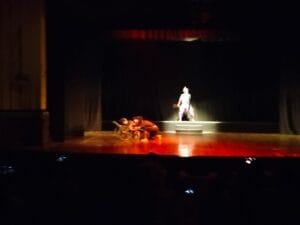
While celebrating a hundred years of theatrical achievement, it is crucial to remain critically engaged—recognising the power of theatre to shape collective memory and the responsibility to present history with honesty and nuance. As Manipuri theatre continues to evolve, it holds the promise of not only entertaining but also enlightening, fostering a deeper understanding of history’s complexities and its ongoing relevance in shaping identity. Performing history is an act of cultural resilience—an ongoing story that, like the theatre itself, is vibrant, dynamic, and forever in motion.
(Usham Rojio teaches at Visva-Bharati (a Central University), Santiniketan, West Bengal. He is also a theatre worker and co-author of the book Heisnam Sabitri: The Way of the Thamoi.)