

Heirangkhoinida is not just an old folk song. It is a gentle philosophy sung in melody. It tells us how our ancestors viewed life, not as a straight line, but as a circle of relationships and emotions. The song carries a moral vision: to love deeply, to remember gratefully, and to live with humility.
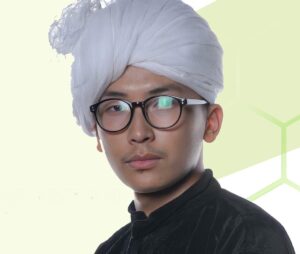
By Marjing Mayanglambam
Almost every Manipuri born before the 2000s must have heard, at least once, the enchanting song “Heirangkhoi nida Chanaba heinida da.” It has echoed through Lai Haraoba grounds, flowed through Pena Eshei and Khunung Eshei gatherings, and stayed alive in the memories of our elders. The song is not just a melody, but is a world of metaphor, emotion, and philosophy. Each time I hear it, I am reminded that folk songs like this are more than entertainment; they are windows into the way our ancestors understood life.
As someone who has spent years within the realm of arts and culture, I find Heirangkhoinida endlessly fascinating. Different Ojas, Gurus, and elders interpret it differently, and each interpretation carries its own wisdom. In the humanities, such plurality of meaning is not confusion but shows its richness. I do not claim to have the final word on this song, but rather to explore its layers with affection and curiosity. After all, our traditional songs were never meant to be fixed in one meaning; they were meant to live, breathe, and grow with each listener.
For anyone who has not yet heard Heirangkhoinida, I would urge you to listen to it first. Only then will you truly feel its pull and the kind of beauty that cannot be fully explained in words.
Heirangkhoinida belongs to the Leimarel Seishak, one of the nine Seishak Mapal classifications in Oja Mangi’s musical tradition. It falls specifically under the Kanglei Haraoba division, the sacred celebration that embodies Meitei cosmology and artistic expression. The song is sung during Lai Haraoba processions by the Pena Asheiba in the Laibung, which is the courtyard of the deity.
Musically, it is exceptional. The melody of Heirangkhoinida travels beyond the usual six-note framework found in most Meitei songs. This expansion gives it a rare, almost mystical texture as if the melody itself is reaching beyond earthly limits. It would not be surprising if influences from neighbouring musical traditions have mingled with it over centuries. Other genres, like Khunung Eshei, Moirang Sai, and Pena Phamshak, also have songs which use the same Leimarel Seishak styles, and even the beloved “Chingda Satpi Engellei” shares this lineage. Usually, the Leimarel Seishak is sung slowly, with deep emotion, though it can also take on a quicker rhythm in dances like Khamba Thoibi.
The Heirangkhoi fruit, known in scientific terms as Garcinia xanthochymus, is more than a botanical curiosity here. It is the very heart of the song’s metaphor. According to a study by Sharma, Ph., Thingbaijam, Dikash, Handique, Pratap, and Devi, Huidrom (2012) in NeBio III, this fruit grows abundantly in Manipur. Yet, within the song, it carries a much deeper symbolism.
When I first heard this song as a child, I had no idea what it meant. None of us dared to ask our elders either. Many of our folk songs are wrapped in gentle secrecy and are left for us to discover their meanings as we grow older. That, I believe, is the beauty of our culture, where its wisdom comes to us slowly, like dawn breaking over the hills.
Later, I came to learn that the Heirangkhoi fruit represents a mother’s breast, and the milk that nourishes an infant is symbolised as its sweetest taste. This realisation moved me deeply. The song, then, becomes an ode to motherhood, which is a tender remembrance of the bond that sustains our very being. It is a reminder of love in its purest form, of gratitude that runs deeper than words. In many ways, Heirangkhoinida sings about the roots of human emotion, the earliest connection we all share between mother and child.
In its later verses, the song takes a more philosophical turn. A bird flies away, only to lose its way when it tries to return home. The bird becomes a symbol, perhaps of the soul wandering through life and death, perhaps of the human heart that strays and searches for belonging again. When the song calls out to the bird as a beloved, urging it to return from the land of death, it touches on something universal, which is our longing for reunion, our refusal to let go of those we love.
There is also a delicate mention of jealousy, expressed through the imagery of bees and flowers. Here, nature mirrors human emotion, such as our desire, possessiveness, and sorrow. I see this song as a portrait of life itself: love, loss, yearning, and the eternal cycle of return.
To me, Heirangkhoinida is not just an old folk song. It is a gentle philosophy sung in melody. It tells us how our ancestors viewed life, not as a straight line, but as a circle of relationships and emotions. The song carries a moral vision: to love deeply, to remember gratefully, and to live with humility.
In our time of rapid modernisation, we often forget these simple truths. Technology and convenience have brought us comfort, yes, but they have also distanced us from the emotional roots that once defined our humanity. Songs like Heirangkhoinida pull us back and remind us to value the relationships that make us who we are: our parents, our partners, and our communities.
As an indigenous people, we have inherited more than just art; we have inherited ways of feeling and understanding the world. Our songs are not just sounds, but they are teachings, philosophies, and prayers passed through generations.
So, when I listen to Heirangkhoinida, I hear not only the melodious Pena and vocals and their haunting tune, but also the voices of my ancestors whispering through it. I hear reminders of who we were, and who we must continue to be.
Let us keep singing it, teaching it, and living by the values it carries. For in remembering our songs, we remember ourselves.
Song Lyrics:
Heirangkhoinida Chanaba Heinida
Sibuda Thoina Haoba Heidi Chindamba Heinida
Chekla Paikharabada
Pombi Hanjin Lakpada
Chekla gi Kaidongfham Khangdaduna
Pombi Kakngao nakhare
Sabi Ine Macha, Pamubi
Chingnungi Sana Loktudagi Paibirakloda
Mamang Leikai Thambal Satle
Khoimu na Ille, Khoiraba
Sabi Lao Lao, Chatsi Lao
Kallakpa Yammi,
Kanjaoba Yammi
Mangda Thaa ro lao
Lamsonbigi Lamyaida,
Monu na ware pothaba
Ipaam gi lamdam yenglubadi
Nungshiba Maikei Tamhoure
(Marjing Mayanglambam is currently pursuing M.A. Folklore & Culture Studies. He is also a Pena Artiste & Researcher, Laihui Ensemble)