

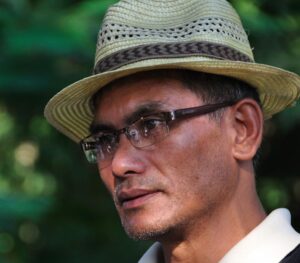
By Deben Bachaspatimayum
The author as a native peace activist reflects on a landmark Army-University initiative to address Manipur’s “trust deficit,” questioning if the security forces can truly evolve from being part of the problem to becoming facilitators of a multi-layered solution. While celebrating the intent, this article highlights the critical absence of a dedicated peace budget and the dangerous proximity of state and national elections, which risk undermining the very foundations of this fragile process.
Time out before asking what next?
I waited for my turn with my hand raised to ask two simple questions in the Q&A session of A Special Lecture on Manipur Situation: Prevailing Trust Deficit and The Path Towards Trust Building, delivered to celebrate an MoU signed between Manipur University and Army authorities at the MSFDS, Palace Compound, Imphal, on 28th September 2026. However, the last few minutes were given over to an AR Officer to present his views and concerns on the people’s narrative-making, which has negatively affected the images of the forces on the ground. After listening to the concerns for forces on the ground, I also returned happily with clarity on the role of the SF in a straight and blunt answer from Lt. Gen (Retd) Konsam Himalayas, who moderated the panel discussion: The Army should never get into this area outside the mandated duties! I hope this opinion finds resonance with that of the Home Ministry also, but at the same time, I am also against foreclosing the option of playing a facilitating or participant-observer’s role, as was strongly suggested by the panellists, in creating a safe space for multi-stakeholder involvement in the process of addressing the ‘Trust-Deficit’ in all its entirety. I say this because there are demonstrated models of the armed forces facilitating successful conflict transformation processes in the Philippines and elsewhere in other countries experiencing asymmetric intrastate vertical and horizontal armed conflicts.
Trust-deficit to trust-building is a post-war foundation for the conflict resolution process to move on. It is a continuous process of creating reliable relationships by actively involving all parties who have a stake in the conflict. This requires an inclusive and collaborative approach, leaving behind old antagonistic and hostile perceptions about each other with clear communication, consistent actions, setting up a feedback mechanism, and ensuring the accountability of all stakeholders in the process. What is most important in initiating such a path-breaking step is LISTENING with an OPEN HEART and MIND as responsible citizens. And the conflict resolution process in the case of Manipur has to be a multi-stakeholder and multi-layered engagement to arrive at a comprehensive solution acceptable to all parties in the conflict.
I felt honoured to be invited as a native ‘Peace Activist’ to the special lecture, which came up as part of a recently signed MoU between the AR-Army and Manipur University – a new chapter towards a larger conflict resolution programme. This is something I have longed for and made efforts towards for many years with Col (Retd & Late) Jassal and a Rotarian in-charge of the Peacebuilding Fellowship programme while he was alive. The event for me was a very well-thought-out strategic initiative on the part of the Union Government through its Army for a social transformation process in Manipur. I trust that the Government is determined and well-intended, as Yumnam Khemchand, the Hon’ble Chief Minister, who is also currently making peace-making efforts across divides and opening important roads, graced the opening function, promising the Government’s full support and encouragement for the initiative. As a keen observer of the lived-in conflict situation, the context within which the programme is set and a few critical factors that must be considered openly for the public must also be highlighted.
The present context of the programme
The security forces on the ground have been losing their neutrality in the eyes of both the Meetei and Naga communities on one side and the Kuki armed groups under the SoO with the AR-Indian Army. Three communities are locked up in contesting claims and counter-claims over territories and autonomy. The BJP Government is facing an election anytime in 2027. The party has been in recovery mode regarding the lost image and trust of the people. The news about Amit Shah, the Hon’ble Home Minister, visiting the state in the first week of August has been in the air to do something great after three years of the outbreak of violence in the light of the forthcoming election. The ‘Naga community’ is frustrated to the extreme, while the series of uncontrolled and repeatedly targeted brutal killings of 10 Liangmei tribesmen, a minority tribe (6 men on 13 May and 4 on 27 September 2026) by armed Kuki outfits in the immediate neighbourhoods, has created a deep sense of insecurity and trauma in the community without any relief from the security forces on the ground. Liangmei villagers say that they are being targeted to displace them from their ancestral villages, which has become a major hurdle on the ‘tiger road’ – passing through Liangmei territory as the only alternative road connecting Kuki-zo dominated areas; Churachandpur, Tengnoupal, and Chandel districts. While the mutilated bodies of the first six men killed remain unclaimed, demanding justice, another targeted killing of four more Liangmei tribesmen on 27 August has made the situation extremely tense, with Naga bodies calling for a total shutdown. And in the valley and hills, the Naga and Meetei communities are on an intensive campaign: “NRC before CENSUS” against the interests of the Kuki political groups.
The right persons on board
The special lecture: *Prevailing Trust Deficit and The Path Towards Trust Building* was delivered by one of the finest concerned citizens, writers and researchers, Sudeep Chakravarty, a Professor of Practice, Chair and Communication Programme, and the Stepwell Centre for Asian Future, at the University of Ahmedabad, Gujarat, presenting an ‘outsider-insider’, well-studied humane, historical and cultural view. And to complement the outsider-insider view for a comprehensive understanding of the situation in charting out multi-stakeholder and multilayered pathways towards trust-building, the organisers had three of the finest native conscience-keepers of Manipur for their well-informed insiders’ views on the situation: Dr. RK Nimai (Retd IAS), who had a lived-in history of the state and served the state Government in his best capacities; Pradip Phanjoubam, widely read and consulted for his ethical journalism and alternative perspectives on the Manipur situation; and Th. Brojen (Retd IPS), who served in the heart of the security sector and retired as the Chief Security Advisor to the UN Iraq Mission at the UN HQs. The combined views of these three insiders on critical areas of concern – demographic anxiety, socio-economic relations between hills and valley, and security concerns in the state – successfully created a comprehensive cross-sectional picture of the current situation. And Lt Gen (Retd) Konsam Himalaya, the highest-ranking retired army officer from the state who served in some of the most disturbed conditions in India, was the perfect choice to moderate the panel discussion after the special lecture was delivered.
Historical connect to the present initiative and scope
For me, having Professor Sudeep Chakravarty from the University of Ahmedabad, Gujarat, in Manipur at the Palace compound – approximately 3,000 kms away from the west of India – served two purposes: 1) it refreshed the memory of the then highly respected and most powerful Home Minister, Sardar Patel from the same state, ordering the ‘take-over’ of Manipur as the root cause of the original ‘trust-deficit’ and the consequential violence in Manipur in the extreme east; 2) Prof Sudeep, representing a prestigious University in Gujarat, having personally studied Manipur minutely from an outsider-insider perspective, explored path-breaking ideas of addressing the ‘trust-deficit’ in partnership with Manipur University. This is definitely a new chapter in the west and east relation within India after 76 years of human suffering through the deep militarisation of the state. Although the present effort is to address the trust-deficit between ethnic communities, I do hope that in future, the scope of the partnership should also cover the root cause of the Manipur problem. Now, I would make some observations and suggest a few in support of this rare initiative after a lifetime for regional peace, security and development.
Observations
It must be acknowledged that the Assam Rifles-Indian Army, deployed under AFSPA 1958 for counter-insurgency operations, has been a key stakeholder in Manipur’s problem from day one. Therefore, it is also the right institution to be part of the solution for a better democratic nation and state. Whether perceived or actual, the two major communities, Meetei and Nagas, think the security forces have their own stake and perspective on the situation and are hence playing a partisan role with the SoO Kuki armed groups in the ethnic violence in Manipur. Manipur seeks a holistic solution for a critical role in the region’s peace, security and development, based on its rooted history. The security forces can certainly take a new role, as was suggested by Th. Brojen, as a facilitator of resolving the ethnic conflicts while also preparing the ground for resolving Manipur’s political issue. No more denial or narrative-making, especially when an MoU has been signed with Manipur University to chart out a new course, will help.
Lt. Gen. Vikas Lakhera struck the right chord for new things to unfold in his opening speech by stating that although the AR-Indian Army has grown through the worst situation as part and parcel of it, they alone are not capable enough to address the ‘trust deficit’. He expressed the necessity for multi-stakeholder involvement and the Army’s preparedness to shift its role to facilitate a process of peace and reconciliation across the divides. The Special Lecture from Prof Sudeep presented a comprehensive view of Manipur’s problems by focusing on the horizontal conflicts – the local ‘ethnic problems’ of Manipur. The lecture touched upon several nuances and sensitive areas of its composite cultural traditions and heritage – the east-west connection – in his best efforts to give a lived experience and aspirations of Manipur. He raised questions like, would you like to have both Nongpok thong and Nongchup thong opened for Manipur, which is the historical and cultural connection with the native states of the two neighbouring regions; South Asia in the west and Southeast Asia in the east, to reap the fruits of development under the Look East Policy (1993)/ Act East Policy (2024)? This was clearly a forward-looking invitation to leave behind the past and move forward to explore better opportunities. He also suggested important institutional mechanisms like a Manipur Peace Council and reviving the State Human Rights Commission to facilitate a process of trust-building.
Manipur is afflicted with systemic vertical conflict – a divide between royal families contesting the seat of power of the native state – and so this divide continues to inform present electoral politics. The ‘take-over’ or the merger of Manipur in 1949 by the Dominion of India was possible only when the then Indian National Congress colluded with the Manipur State Congress Committee in total rejection of the successful people’s movement that had transformed the erstwhile monarchy into a constitutional monarchy with an elected legislative assembly representing both the Hills and Valley. The resentment and national humiliation experienced by the first elected legislative assembly of Manipur was soon transferred to the politically active generations of educated youth who began demanding the restoration of the internal sovereignty of Manipur from the 1960s. The leaders of the movement, frustrated by the Government, picked up arms like Bhagat Singh by the 1980-90s, when AFSPA 1958 was extended to the entire valley also on request from the then Congress Government headed by a faction of the Royal Class. These internal armed struggles, known as ‘Counter-Insurgency Operations’, have destroyed Manipur badly – giving more reasons for the people to keep up the struggles through generations. Addressing the root cause of the ‘trust deficit’ as part of the original vertical conflict must be included within the scope of the partnership programme.
Before I come to the suggestions, one most critical issue is the total absence of a peacebuilding fund/budget for civil society engagements, except for the SRE budget the Assam Rifles-Indian Army was provided with to spend on maintaining cordial relations with villages and communities. This budget is not accessible to CSOs. Peace is not budgeted, and so there is no fund to implement even some of the most valuable suggestions, such as people-to-people dialogue, setting up a Manipur Peace Council, and a Truth and Justice Commission, etc. Although the Home Ministry and CM have been encouraging dialogue and reconciliation across the conflicting communities, they have not come up with any dedicated budget accessible to civil society groups and religious bodies. All the peace meetings are limited to Government and Army initiatives. This raises serious questions: How serious is the Government for peace among the people? Why are the Army and Government only trusted for addressing the issue of trust-deficit? It also highlights the limitations of a top-down approach to peace without any committed budget to support bottom-up people’s peace and reconciliation processes.
Suggestions
The Army can certainly undertake a path-breaking “Facilitator’s Role” as suggested by Prof Sudeep and Th. Brojen, the security expert and panellist. There are demonstrated models in the Philippines and elsewhere. This requires the Army and Paramilitary forces, who have grown with conflict as part of the problem, to take a paradigm shift to become part of the solution without compromising their mandated duties. This requires training of army officers in conflict analysis so they may shift their targets from ‘anti-nationals’ or ‘insurgents’ to the problems that produced them. I humbly suggest top officers of the 57 Mt Division take an exposure learning trip to the Philippines.
The root cause of this vertical conflict, the original ‘trust-deficit’, is directly connected to the horizontal conflicts in Manipur by default or design. This is much internal to Manipur and also subject to external interference from the Union Government. The original trust-deficit, which is racially and culturally coloured, has actually entrenched over the years. This must be addressed by following appropriate reconciliation processes between the state and the people and among the ethnic communities.
Let me end this article with the two unasked questions: 1) What next? And 2) How prepared, and for how long, are the Assam Rifles-Indian Army (SF) HQs, in charge of the long-drawn counter-insurgency operation, to shift their role in taking forward these path-breaking initiatives to address the critical issue of the ‘trust-deficit’? And has the Union Government committed a special fund for addressing the root causes of the inter-ethnic trust-deficits?
(Deben Bachaspatimayum is Imphal based expert in peace and conflict resolution)