
I didn’t enter academia for prestige. I entered it out of frustration. Too often, performers are misunderstood, misinterpreted, and undervalued by academic systems that prioritize theory over practice.
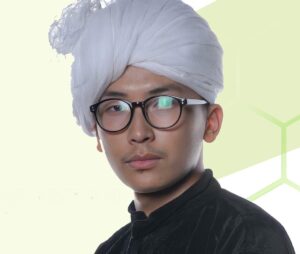
By Marjing Mayanglambam
Manipur, my motherland, is often reduced to headlines about sports or political unrest. But beneath those headlines lies a vibrant cultural heritage—one that pulses through music, dance, and performance. As an indigenous folk musician, I’ve spent years trying to share this richness with the world. Yet no matter how many times I perform, write, or archive, it never feels like enough. Because art, in its truest form, resists being captured. It must be lived.
I didn’t enter academia for prestige. I entered it out of frustration. Too often, performers are misunderstood, misinterpreted, and undervalued by academic systems that prioritize theory over practice. Scholars dissect our performances, critique our technique, and evaluate our interpretations—often without ever having touched the instruments or felt the rhythms themselves.
They reduce our living art to diagrams, footnotes, and journal entries. And tragically, many elder performers begin to believe these critiques simply because they come with credentials.
The Divide Between Knowing and Living
There’s a fundamental difference between studying art and living it. A scholar may study rhythm, but only a musician feels it.
He or she may write about dance, but only a dancer moves through it. A person may lecture a swimmer about swimming, but the experience remains hollow. This divide is not just frustrating—it’s stifling. The academic gaze often limits creative freedom, dissecting improvisations and questioning instincts in the name of scholarly authority.
Despite this tension, I’ve chosen to straddle both worlds. I perform, I write, I archive—not to mimic academic arrogance, but to create resources that speak from the performer’s perspective. My goal is to offer authentic materials for students, researchers, and fellow artistes—resources that reflect how traditions are lived, not imagined in lecture halls.
This dual engagement is more than a personal choice. It’s a quiet act of resistance. It asserts that the knowledge held by practitioners is legitimate and cannot be fully captured by theory alone.
Performing as a Way of Knowing
Understanding deepens through practice, repetition, and interaction. This knowledge is nuanced, layered, and often ineffable—something academic language alone cannot express. While some scholars genuinely collaborate with performers, such relationships are rare. Too often, the theorist’s word outweighs the practitioner’s wisdom, shaping perceptions and limiting artistic freedom.
I remain committed to challenging assumptions about who holds knowledge and whose voices matter. Our cultural traditions deserve to be heard from those who live them—not filtered through detached, authoritative voices. Until academia learns to truly listen—to performers, artisans, and practitioners—our heritage will remain at risk of being misunderstood or misrepresented. Art is not merely for analysis; it is for living, sharing, and feeling.
So I will continue to perform, to write, to speak. I will continue to insist that Manipur is not just a land of sports or politics, but a land of art, music, and culture that demands respect and genuine understanding. And I will continue to challenge those who believe that studying an art is the same as living it.
(Marjing Mayanglambam is currently pursuing M.A. Folklore & Culture Studies. He is also a Pena Artiste & Researcher, Laihui Ensemble)