

In a rejoinder to “The Post-Colonial Language Game That Pushes Meitei to the Margins” by Kh Ibomcha, Homen Thangjam says the article is an essential contribution to the discourse on Manipur. Its use of Lyotard’s differend is original and illuminating, and it is a genuinely difficult manoeuvre to bring a demanding piece of continental philosophy to bear on a living political crisis without flattening either side.
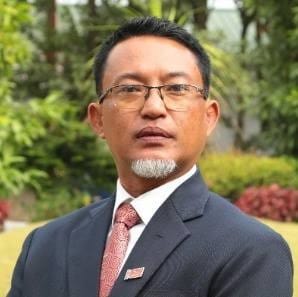
By Homen Thangjam
Kh Ibomcha’s article in The Frontier Manipur is an intellectually ambitious attempt to reframe the crisis in Manipur through the lens of Jean-François Lyotard’s concept of the differend. It argues that the Meitei community’s existential concerns cannot be properly heard within the Indian State’s post-colonial legal and political vocabulary. The article is powerful because it moves beyond the familiar language of ethnic conflict and majoritarian dominance. It suggests that the problem is structural and linguistic, not merely political. However, whilst the theoretical framework is compelling, the article often relies on assertion rather than detailed illustration. It also leaves several empirical and practical questions unresolved. These notes examine the article’s strengths and gaps in a structured manner, offering quotations from the original and supplying the kinds of illustrations that would help complete the argument it opens.
The Theoretical Wager and Its Limits
The article’s central theoretical move is to describe the Meitei predicament as a differend. In Lyotard’s sense, a differend exists when a wrong cannot be phrased because the idiom of the tribunal that judges it is not the idiom of the victim. The article expresses this with real force: “the post-colonial tribunal will continue translating our extinction into its own administrative categories and declare that nothing happened.” This is a devastating sentence. It captures how bureaucratic rationality can render certain harms invisible. It also explains why the Meitei often appear incoherent to outside observers. They are not simply losing an argument. They are unable to make their argument in terms that the State recognises as legitimate.
However, the differend is a deeply pessimistic concept. In Lyotard’s own formulation, a differend cannot be resolved; at best, a partial resolution can be negotiated by inventing new rules of judgement. Ibomcha’s article does not pause to acknowledge this bleak implication of the very concept it borrows, and that omission is itself worth noting, since it raises an urgent question the article leaves open. If the differend cannot be resolved, what follows? The article calls for a “new legal and political idiom,” but it does not specify what that idiom might be. It could have illustrated its proposal by examining existing constitutional experiments. For example, Article 371A for Nagaland, Article 371G for Mizoram, and the Sixth Schedule for autonomous district councils in Assam, Meghalaya, Tripura, and Mizoram all attempt to hear indigenous claims in languages that are not simply majoritarian. A new idiom for Manipur might draw on these models, or it might require something entirely different, such as a Manipur-specific constitutional arrangement that recognises both valley and hill rights without reducing them to a zero-sum competition. The article does not explore these possibilities. As a result, its diagnosis is sharper than its prescription.
The Land-Language Differend
The article identifies a genuine paradox in what it calls the land-language differend. When Meitei people say “protect the valley,” the dominant discourse hears “encroachment on tribal rights.” This is a real and painful trap. The Meitei fear territorial shrinking and statelessness, but the available legal vocabulary codes them as encroachers rather than as a vulnerable community. The article is right to highlight this. However, it does not provide the concrete legal and historical illustrations that would make the argument vivid.
For example, the article could have cited the Manipur Land Revenue and Land Reforms Act 1960. The Act’s own text is instructive here: Section 1(2) excludes the hill areas from its operation altogether, leaving hill land under customary tenure and the protections of Article 371C, whilst Section 158 bars the transfer of Scheduled Tribe land to non-tribals within the areas, chiefly the valley and certain notified tribal belts, where the Act does apply. The asymmetry the article gestures at is therefore not the product of a single restrictive clause but of two land regimes operating side by side: a valley regime under the 1960 Act, in which land can pass between communities, and a hill regime built on customary tenure and constitutional protection, from which Meitei buyers are excluded by the Act’s own non-extension. This asymmetry is not merely administrative. It shapes everyday life, economic opportunity, and demographic anxiety. The article could also have cited the Manipur (Village Authorities in Hill Areas) Act 1956, which recognises customary law in hill areas. These laws create a legal landscape in which Meitei claims to protection are automatically translated into claims to encroachment. A concrete discussion of these statutes would have shown exactly how the differend operates.
The article also asserts that “after May 3, 2023, we began seeing the direct implications and truly felt the long-term effects of experiencing narco-infiltration, illegal immigration from the Myanmar border, demographic change…” This is a serious claim, but it is not substantiated. The article could have illustrated it with data. It could have cited narcotics seizures by the security forces and the Narcotics Control Bureau in Moreh and Tengnoupal. It could have discussed the Free Movement Regime along the India-Myanmar border and the influx of refugees after the 2021 military coup. It could have presented census data on demographic change in the valley and the hills between 2001 and 2011. It could have mentioned the proposed border fencing and the debates around biometric registration. Without such illustrations, the claim remains rhetorical. It may be true, but the reader is asked to take it on trust.
The article also refers to “sacred hills and shrines like Koubru and Thangjing.” This is a powerful image, but it is not developed. Koubru is a sacred mountain in Meitei cosmology, located in the Kangpokpi district. Thangjing is associated with Moirang in the valley. Both are sites of deep religious and cultural significance. The article could have explained how these sites are threatened by deforestation, construction, landslides, land alienation or even seizure. It could have shown how the protection of sacred sites is caught in the same differend. When Meitei people demand protection for Koubru, the state hears a demand for control over hill land. When hill communities demand protection for their own sacred sites, the state hears a demand for tribal autonomy. The differend is multi-directional, but the article presents it as one-directional.
The Identity-Language Differend
The article’s discussion of the identity-language differend is also insightful but incomplete. It argues that the Meitei claim for Scheduled Tribe status is heard through the state’s language game of affirmative action and quotas. The Meitei are “coded as dominant, Hindu, general, valley-centric majority.” This coding reduces their existential need for protection to a claim for benefits. It also reads their demand as an attempt by a dominant group to dilute tribal benefits. This is a genuine dilemma. But the article does not engage with the legal criteria that produce this coding.
For example, the article could have cited Article 342 of the Constitution and the Scheduled Tribes Orders. It could have discussed the Lokur Committee criteria, which include primitive traits, distinctive culture, geographical isolation, shyness of contact, and backwardness. These criteria are themselves a post-colonial language game. They were designed to identify communities perceived as outside the mainstream. The Meitei do not fit these criteria. They are not geographically isolated. They are not shy of contact. They are not primitive in the colonial sense. The article could have analysed how these criteria make the Meitei claim unphraseable. It could have shown how the 2023 High Court order directing the state to consider ST status for Meitei triggered a crisis because the legal language of ST status could not hear the Meitei’s actual fear of extinction.
The article could also have illustrated the counter-arguments from hill communities. Kuki-Zo and Naga communities oppose ST status for Meitei because they fear it will alter the demographic and political balance. They also point to the Meitei’s numerical majority, economic dominance, and control of the state apparatus. The article does not seriously engage with these concerns. It could have acknowledged that hill communities also have legitimate grievances. It could have discussed the Kuki-Zo memory of violence and displacement, or the Naga demand for the integration of Naga areas. It could have shown that the differend is not simply between the Meitei and the Indian State. It is also between the Meitei and other communities, each of whom has its own language game.
The article could have strengthened its argument by comparing the Meitei case with other majoritarian claims of backwardness in India. The Marathas, Jats, Patidars, and Gujjars have all demanded reservation or ST status. Their claims are also caught in a differend. They are too large to be considered marginal, yet they experience real economic and social distress. A comparative illustration would have shown that the Meitei case is not unique. It would also have shown that the Indian State’s legal vocabulary consistently fails to hear claims that do not fit its rigid categories.
A Note on the Article’s Own Evidentiary Standard
A comprehensive critique ought to apply the same evidentiary standard to the article’s foundational claims that it asks the article to apply to the State’s categories. The article states that Meitei “lost Scheduled Tribe status after the 1949 merger,” a claim frequently repeated in Meitei political discourse, but the precise legal status of Meitei communities before and immediately after 1949 remains disputed among historians of the merger, and the claim would benefit from the same sourcing the article implicitly demands of the State. Likewise, the founding statistic that Meitei form “53 percent” of Manipur’s population “confined to about 10 percent” of its land is repeated so often that it has become received wisdom, yet population-share estimates vary by source and year, and the figure deserves a citation of its own. Neither observation undermines the felt reality the article describes. But a piece that faults the State’s tribunal for demanding proof it will not accept would be stronger for extending that same rigour inward, to the numbers and the history it treats as self-evident.
The Victimhood-Language Differend
The article names a third language game that these notes have not yet addressed, and it deserves its own treatment, since it is arguably the article’s most original contribution. Ibomcha argues that the national media already operates with a pre-set frame in which hill communities are the oppressed and valley people are the oppressing majority, so that “even when we speak of being a victim, it sounds illegitimate, because the judge, the national media, has already recognised the other as victim.” This is a different kind of differend from the land and identity versions discussed above. It is not only that Meitei claims are mistranslated into the wrong legal category. It is that the very position of victim, prior to any specific claim, is already allocated by narrative convention before the speaker opens their mouth. That is a sharper and more troubling idea than either of the two differends the article develops in greater length, and it is a pity the article devotes only a few paragraphs to it.
The claim would have been strengthened by illustration in the same way as the other two sections needed it. The article could have examined how national coverage of the 2023 violence allocated the language of atrocity and displacement asymmetrically in its early weeks, or compared the Manipur case with other instances in Indian public life where a numerically dominant group’s claim to victimhood has struggled for recognition, such as the long and contested afterlife of the Kashmiri Pandit displacement narrative in national discourse. Such comparisons would have shown that the problem Ibomcha identifies, namely that recognition as a victim is itself gate-kept by pre-existing narrative infrastructure rather than by the facts of a given episode, is a structural feature of how post-colonial Indian media handles competing claims generally, not a fate unique to the Meitei. The article also does not consider that this gate-keeping runs in more than one direction. Hill communities have their own long-standing grievance that their suffering, too, has historically gone unheard by a state and a national media centred on the valley; the differend of narrative authority, in other words, may be multi-directional in the same way the land-language differend is. Naming that would not have weakened the article’s case. It would have made the case that unphraseability, rather than any one community’s particular suffering, is the shared and prior wound.
The Missing Linguistic Game
The article’s title promises a focus on language. However, the body of the piece devotes more attention to land and identity. The linguistic differend is present in the call for a “new legal and political idiom,” but it is not fully explored. This is a significant gap. The article could have illustrated the linguistic dimension by discussing the Meitei Mayek script and the Bengali script controversy. Manipuri was included in the Eighth Schedule of the Constitution in 1992 through the 71st Amendment. This was a major achievement. But constitutional recognition has not translated into genuine linguistic justice. The Meitei language is still perceived by many hill communities as an imposition. The state government has promoted Meitei Mayek on signboards and in education. Hill communities have sometimes resisted this promotion. In Moreh, for example, Kuki-Zo bodies have called for a ban on Meitei Mayek in schools. This is a concrete linguistic differend. The Meitei demand for script recognition is heard as cultural domination. The hill demand for linguistic autonomy is heard as separatism.
The article could also have discussed the generational divide in script literacy. Many older Meitei people are literate in Bengali script. Many younger people are literate in Meitei Mayek. This divide creates its own internal tensions. It also complicates the claim that the Meitei are a unified community. The article speaks of “the Meitei” as a single subject. It does not address the Meitei Pangals, who are Muslim, or Meitei Christians, or the caste and class divisions within Meitei society. These groups may experience the differend differently. A Meitei Pangal may face double marginalisation. A poor Meitei farmer may experience land anxiety differently from a wealthy Meitei trader. The article could have illustrated this internal diversity. It would have made the argument more nuanced.
Counter-Arguments and Internal Diversity
The article does not seriously engage with the perspectives of hill communities. It frames the Meitei as the victims of structural unphraseability. This is a valid framing, but it is incomplete. Hill communities also have grievances. They have experienced land alienation, military repression, and political marginalisation. They have their own differends. The article could have acknowledged this. It could have shown that the Manipur crisis is not a simple case of a dominant group being silenced. It is a collision of multiple differends. The Meitei fear extinction. The Kuki-Zo fear displacement. The Naga fear integration into a Meitei-dominated state. Each community has a language game that the others cannot fully hear.
The article could also have discussed the role of the Indian State in producing these differends. The post-colonial state is not a neutral tribunal. It has its own interests. It has used the hill-valley divide to manage Manipur. It has deployed the Army and the Assam Rifles. It has imposed laws such as the Armed Forces (Special Powers) Act. It has failed to deliver development. The article mentions the state’s legal vocabulary but does not analyse its political economy. It could have illustrated how the differend is produced by material interests, not just by language. It could have discussed the drug trade, the border economy, and the politics of land. This would have grounded the theoretical framework in concrete reality.
The Practical Horizon
The article concludes with a call for a “new legal and political idiom.” This is an urgent and necessary call. But it remains abstract. The article could have illustrated what such an idiom might look like. It could have proposed a truth and reconciliation commission for Manipur. It could have proposed a federal arrangement that gives hill districts genuine autonomy whilst protecting Meitei interests in the valley. It could have proposed a new constitutional schedule for Manipur that recognises the unique status of both valley and hill communities. It could have proposed a dialogue process that does not begin with the state’s legal categories. It could have discussed the role of civil society, religious leaders, and women’s groups. It could have examined the Manipur Human Rights Commission and the Hill Areas Committee. It could have asked whether the Supreme Court can serve as a tribunal of justice rather than a tribunal of law. Without such illustrations, the call for a new idiom remains a slogan rather than a programme.
Conclusion
Kh Ibomcha’s article is an essential contribution to the discourse on Manipur. Its use of Lyotard’s differend is original and illuminating, and it is a genuinely difficult manoeuvre to bring a demanding piece of continental philosophy to bear on a living political crisis without flattening either side. It shows that the Meitei community’s grievances are not simply political demands that can be met with better arguments. They are structurally unphraseable within the Indian State’s post-colonial vocabulary. The article’s central insight, that “arguing better inside the language game that already judges us” is not enough, is both true and urgent. It deserves to be taken seriously, and it deserves the wide readership it is likely to find.
The suggestions offered here, for further illustration, for a fuller reckoning with the differend of victimhood, and for turning the same evidentiary demand back on the article’s own founding claims, are offered in the spirit of a piece worth improving rather than a piece worth dismissing. That distinction matters. Work of this ambition, attempted this early in a scholarly career, already shows the instinct that cannot be taught: the sense that a theoretical concept is worth reaching for only when it genuinely explains something the ordinary political vocabulary cannot. That instinct is rarer than technical polish, and it is the harder thing to have got right. The empirical grounding and the fuller engagement with competing differends can be built in revision. The underlying argument is sound, and it is the work of a writer worth watching. Congratulations on a piece that earns its ambition; the next draft, with these additions, should more than earn its case.
(Dr. Homen Thangjam is a prominent political scientist, academic, and socio-political commentator from Manipur)