

The deferment of delimitation in Manipur remains one of the most glaring instances of political and institutional bias in post-Independence India.
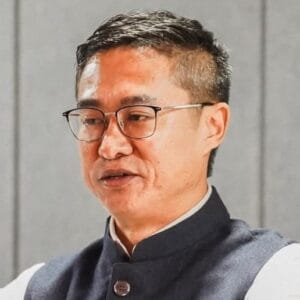
By Lakpachui Siro
Manipur, one of India’s most ethnically diverse states, stands today as a paradox of democracy. While its Constitution promises equality and fair representation, the tribal communities inhabiting more than 90% of the state’s territory continue to be denied proportional voice in the State Assembly.
The issue, though longstanding, exposes a deeper structural imbalance between the Hill and Valley regions; one that continues to shape the state’s politics, policy, and peace. Historical and Geographical Context: Geographically, Manipur is divided into the Hill and Valley areas.
The five Hill districts (before the creation of 7 more new districts) inhabited by 33 recognised tribes — account for around 43% of the population and over 90% of the state’s total land area. The remaining four Valley districts, dominated by the Meitei community, compact but politically powerful. However, this 57% settlement in the Valley includes Meitei-Pangal, migrant settlers, Nepalis and close to 3 lakh State’s tribal population.
Historically, the Hill areas were largely independent of the Manipuri kingdom. The Maharaja’s authority rarely extended beyond parts of the Valley. It was only after the British invasion of 1891 that the Hill regions came under partial administration, often without the consent or knowledge of the local tribes. Post-independence, rather than dismantling the colonial administrative divide, India’s state structure in Manipur retained it; with the Valley continuing to dominate governance and political representation.
The Core Issue: Unequal Representation
At the heart of this imbalance lies a constitutional failure. The principle of equal representation — based on population and geography — is central to India’s democracy. Yet, in Manipur, tribal people who meet both criteria remain underrepresented. According to official data, the Hill districts together send only 20 MLAs out of 60 to the Manipur Legislative Assembly — just 33% representation despite having 43% of the state’s population. In contrast, the Valley districts with 57% of the population control 40 seats, an imbalance that violates not only democratic norms but also Article 332 of the Constitution, which ensures proportionate representation for Scheduled Tribes in legislative assemblies. The disparity becomes stark when comparing Senapati (Hill) and Imphal East (Valley).
Senapati, with a population of about 4.79 lakh, has six Assembly constituencies, while Imphal East, with 4.55 lakh, enjoys eleven. In other words, a smaller district in population terms has nearly double the legislative voice.
The Delimitation Deadlock
The Delimitation Commission had, in its last exercise, had initially recommended the creation of five additional constituencies and later reduced it to three in the Hill districts and a corresponding reduction in the Valley.
However, implementation was deferred in 2008 after strong opposition from Imphal Valley-based political parties and groups. The arguments advanced — that redrawing constituencies would lead to “civil unrest”, “bloodshed,” or “a threat to Manipur’s territorial integrity” ; were not only alarmist but deeply undemocratic. It is disheartening that even the highest offices of the land accepted these arguments.
To suspend a constitutionally mandated process due to pressure from extremist or vested interests sets a dangerous precedent. If equality before the law can be postponed because of potential unrest, then no democratic reform in a conflict-prone region will ever see the light of day. The other justification offered — that the Hill districts showed “abnormal population growth” — has since been invalidated.
The Registrar General of India, in 2014, officially accepted the population count for Senapati district after multiple verifications. Ironically, this has made the tribal census figures some of the most thoroughly verified data in India. Impact on Development and Governance: The denial of equal representation has implications far beyond numbers. Consider the constituency of Phungyar in Ukhrul district, which spans over 2,500 sq km, compared to the average 55 sq km per constituency in the Valley. Yet, every MLA in Manipur receives the same amount in Local Area Development funds; ₹2 crore each. The result is obvious: development funds are stretched thin across vast, mountainous tribal constituencies, while compact Valley constituencies enjoy concentrated investments.
This spatial and fiscal imbalance entrenches inequality in infrastructure, education, healthcare, and economic opportunities. It also perpetuates resentment, fuelling the perception — and often the reality — that the political system works against the interests of the tribal population.
The Way Forward
This is not merely a Hill versus Valley issue; it is about upholding the Constitution. The deferment of delimitation in Manipur remains one of the most glaring instances of political and institutional bias in post-Independence India. Unless corrected, it will remain a dark spot in the history of Indian democracy.
The Government of India must revisit the 2008 order that deferred the delimitation process. The Hill districts, with 43% of the population, deserve at least 32 out of 60 seats, not the current 20.
Furthermore, the application of Article 332 should be extended to include tribal populations residing in the Valley districts, estimated to be around 3 lakh people; nearly 10% of the state’s total population. Equal representation is not just a matter of fairness; it is the foundation of democracy.
A just redrawing of constituencies will not only correct decades of structural discrimination but also build trust between communities and the State.
Manipur’s future stability depends not on appeasing fear but on embracing equality. Only when every voice — Hill or Valley, Tribal or Meitei — carries equal weight in the Assembly can the state truly claim to represent the spirit of equality and democracy, which will ultimately ensure dignity and peaceful coexistence for all the citizens of the State.
(Lakpachui Siro is National People’s Party (NPP) Leader and Naga Social Activist residing at Wino Bazaar, Ukhrul, Manipur. He can be contacted at [email protected])