

His death closes a chapter in modern biology, highlighting both his pivotal role in deciphering DNA’s structure and the enduring debates over ethics, equality, and Rosalind Franklin’s indispensable contributions.

By Dr. Rameshori Yumnam
The world of science this week marks the end of an era with the passing of James Dewey Watson, aged 97, a man whose intellect illuminated the molecular code of life and whose words later dimmed the brilliance of his own legacy. Few scientists have so completely altered the trajectory of human understanding, and yet so profoundly tested the patience of the society that once celebrated them. As the co-discoverer of DNA’s structure passes away, his towering scientific legacy stands entwined with questions of ethics, equality, and the recognition of Rosalind Franklin’s indispensable role.
It was in the spring of 1953 that Watson, alongside Francis Crick, proposed the elegant double-helix structure of deoxyribonucleic acid (DNA), the hereditary molecule that carries genetic information in every living cell. Their model, two intertwined strands bound by base pairs, offered not only a structure but also a profound explanation for how genetic information could be copied and transmitted. The discovery did not merely solve a scientific puzzle; it redefined biology itself. From that moment, the study of life became inseparable from the study of molecules.
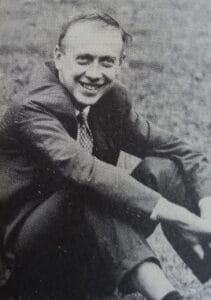
Watson was only twenty-five at the time, young, brilliant, and ambitious, working at the Cavendish Laboratory in Cambridge. Together with Crick, he built on the experimental work of others, particularly the pioneering X-ray diffraction studies of Rosalind Franklin and Maurice Wilkins at King’s College, London. Franklin’s now-famous, Photograph 51, provided the critical evidence that revealed the helical nature of DNA. Her meticulous attention to experimental detail and her refusal to speculate without data made her one of the most rigorous scientists of her generation.
Yet history, as told through Watson’s own memoir The Double Helix (1968), cast Franklin in a deeply unfair light, a portrayal that reflected not just personal bias but the gender prejudices pervasive in the scientific world of the 1950s. Watson described her not as a collaborator, but as an obstacle, focusing on her appearance and temperament rather than her scientific brilliance. Over time, however, Franklin’s reputation has been restored and even exalted; her work is now recognized as the essential foundation upon which the double helix was built. The rediscovery of her importance has sparked broader reflection on how women in science have often been written out of their own achievements.
In 1962, Watson, Crick, and Wilkins were awarded the Nobel Prize in Physiology or Medicine, for their discovery. Franklin, who had died of ovarian cancer four years earlier, was not included as the Nobel Prize is not awarded posthumously. But many still saw her absence as a moral oversight. The debate over Franklin’s exclusion has become emblematic of the struggle for equity in science: a reminder that recognition is not always distributed with fairness or justice.
After the Nobel, Watson’s career ascended swiftly. He became a leading figure in molecular biology, helping to establish the Human Genome Project and directing the prestigious Cold Spring Harbor Laboratory. His influence extended beyond research into the shaping of science policy, education, and funding across the United States. Few scientists have held such institutional power or cultural visibility.
But it was also from that position of visibility that Watson’s public standing began to unravel. His comments over the decades suggesting that intelligence is linked to race, that genetic differences determine social outcomes, and that certain groups are less capable than others, were met with outrage. His statements, unsupported by credible evidence, not only misrepresented genetic science but undermined its very principles of objectivity and respect for diversity. The same curiosity that had once driven him to seek the universal logic of life seemed to have narrowed into prejudice.
In 2019, after a PBS documentary revisited his views on race, Cold Spring Harbor Laboratory severed all remaining ties with him, revoking his honorary titles. Even in his later years, Watson appeared unrepentant, insisting that his views were based on “facts,” a stance that saddened colleagues who had once revered him.
The tragedy of James Watson lies in this contradiction: a man whose intellect unlocked the molecular unity of humankind, yet whose opinions divided it. His discovery told us that all human beings share the same genetic code, differing only by fractions of a percent, a truth that should have deepened empathy, not hardened prejudice.
Still, it is impossible to erase his contribution. Without Watson and Crick’s model, molecular genetics might have taken decades longer to mature. The revolution they sparked led to recombinant DNA technology, genetic engineering, and ultimately the sequencing of the human genome. The medicines we take, the crops we grow, and the forensic tools we use all trace their lineage to that model first sketched in wire and metal in a Cambridge laboratory more than seventy years ago. As the scientific community reflects on Watson’s life, perhaps the fairest tribute is a balanced one that is to honour the discovery while confronting the failings. To remember that science, at its best, transcends the biases of those who practice it. And to celebrate not only Watson and Crick but also Franklin, whose quiet precision and intellectual courage were as essential to the double helix as any flash of inspiration.
Watson gave humanity the structure of life’s code. Franklin showed us the discipline and integrity needed to uncover it. Between them lies a story that continues to remind us that science, like DNA itself, is double-stranded, built of knowledge and conscience, discovery and humility.
(The author is an Assistant Professor in the Department of Zoology, Manipur University.)