
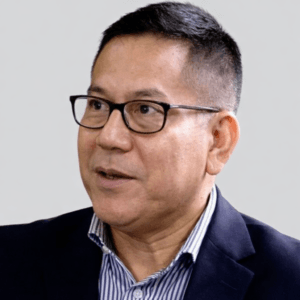
By Brojen Thangjam
“We must remember, but we must not be consumed by memory.” Rwandan reflection
Treasure – Quiet Resolve in a Broken Land
When I first settled into my quarters inside the UN compound in Juba, I was assigned a domestic help contracted by the UN mission. I owned little and rarely cooked, but I agreed to the arrangement. The young woman who arrived introduced herself simply as Treasure. Over time, her presence became quietly reassuring. The room was always clean, laundry neatly folded, and small supplies replaced without being asked. We rarely met. Instead, handwritten notes appeared on the table when something ran out—first in French, later in English. What stayed with me was her handwriting: careful, disciplined, bearing the mark of early schooling and formal education.
Only later did I learn that she was from Rwanda. Her father, a physician, and much of her family had been lost in the 1994 genocide, and like many others, she had grown up in a refugee camp. She never spoke of it, and I never asked. There was an instinctive pull to acknowledge her grief, but doing so would have felt intrusive—a risk of reopening a wound she had chosen to keep closed.
Loss and Recovery: Memory and Restraint
The genocide that shaped lives like Treasure’s is extensively documented and needs little retelling. In roughly one hundred days in 1994, an estimated 800,000 people—mostly Tutsis and moderate Hutus—were killed. The violence was intimate and relentless: neighbours turned on neighbours; killings took place in homes, at roadblocks, and inside churches. Machetes, clubs, and farm tools were the weapons of choice. But this was not a spontaneous collapse into savagery but the culmination of years of political manipulation, organised propaganda, and systematic preparation. State-controlled radio and newspapers dehumanised Tutsis as “cockroaches” while militias were trained and armed.
Rwanda is a small, landlocked country in East-Central Africa, just over 26,000 square kilometres. In 1990, its population of about 7.2 million consisted largely of Hutu, Tutsi, and a small Twa minority. For much of its history, these groups shared language, culture, and everyday life, bound more by social hierarchies than rigid ethnic divisions. The genocide shattered not only lives but these shared social foundations.
What remains hardest to absorb is the scale of international failure. The world watched, debated mandates, and withdrew. The UN mission was underpowered, its warnings discounted and its requests for reinforcement denied. As General Roméo Dallaire later wrote, the failure was not one of ignorance but of will. When the killing ended, Rwanda was left socially devastated.
The speed of Rwanda’s recovery has drawn both admiration and unease. Even critics such as the sociologist Susan Thomson acknowledge how quickly security, administrative capacity, and a basic economic order were restored. Within a few years, the state was functioning again; by the early 2000s, institutions had taken shape; and by the middle of that decade, Rwanda presented itself as a society intent on moving forward.
This recovery, however, was not accidental. It was the result of a tightly managed political project that placed a premium on stability and cohesion, even as it narrowed the space for dissent. Memory was carefully organised—through memorials, annual commemorations, and law—so that it did not fracture public life anew. This discipline was visible in Kigali: calm streets, restrained memorials, and little public display of anger. Many Rwandans I worked with, including members of the military, spoke of the genocide briefly or not at all.
Justice formed a central pillar of this reconstruction. The justice system took a layered approach because, no single court could handle the aftermath of the genocide. The International Criminal Tribunal (ICTR) went after the main masterminds. National courts dealt with mid-level planners and people behind the worst crimes. Then there were the Gacaca courts, which took on the huge number of lower-level offenders—hundreds of thousands of them. Sure, punishing people mattered, but Gacaca focused more on repairing what had been broken. The goal was to get people to confess in public, help everyone face what really happened, and start healing—right in the same communities where everything unfolded. The way to truth telling and coexistence.
This is not a flawless story. Rwanda’s stability rests on a controlled political order. Against this backdrop, the composure of people like Treasure becomes intelligible. Silence and restraint are a way of carrying memory without allowing it to harden into grievance. Today, Rwanda presents itself as a nation reborn: one that has set aside ethnic labels, invested in education and women’s empowerment, and embraced a language of developmental modernity and unity over division.
Gacaca: Justice Beyond Retribution (pronounced Gachacha)
I met Paul Ngogi when I became part of a fact-finding panel. He was Rwandan, a senior staff and served as the team leader. Only much later did I learn that before joining the UN system, Paul had served as an Inyangamugayo—a person of recognised integrity, elected by his community to sit as a judge in the Gacaca courts. His authority came not from legal training, but from trust earned over a lifetime.
Gacaca courts emerged from stark necessity after the 1994 genocide. More than 120,000 suspects filled Rwanda’s prisons, while the formal judicial system had all but collapsed. Conventional courts, even with international assistance, would have taken decades to deliver judgments. Faced with this impasse, Rwanda turned to a pre-colonial tradition of community dispute resolution and adapted it into a nationwide system aimed less at punishment than at accountability and social repair.
Between 2002 and 2012, over 12,000 Gacaca courts heard close to two million cases. Proceedings were held in open-air community gatherings. The accused were encouraged to confess, identify accomplices, and seek forgiveness. Those who did so often received reduced sentences or were assigned community service, while survivors testified publicly—sometimes before those who had harmed them and who still lived nearby. It was an extraordinary, and often painful, exercise in collective truth-telling.
Public response was complex but deeply engaged. Many Rwandans valued Gacaca for its speed, accessibility, and its ability to answer the most basic human questions: how did my loved one die, and where are they buried? Scholars have noted that Gacaca prioritised social truth and reintegration over procedural perfection, shifting justice away from retribution and toward coexistence.
The criticisms were real. Legal safeguards were uneven, false accusations occurred, and public testimony often reopened trauma without sufficient psychological support. Human rights organisations questioned the lack of legal counsel and the pressure to conform to communal narratives. Yet even critics acknowledged a central fact: no other system could have dealt with crimes on this scale.
Gacaca did not heal everything, nor did it claim to. But it allowed Rwanda to confront its past without collective amnesia. When colleagues questioned Paul about the absence of due process as formally understood, he would simply smile and say little. In that restraint lay the answer. Gacaca offered justice beyond retribution and in doing so, it helped a shattered society find a way to live together again.
Living with the Past: A Rwandan Lesson
Rwanda recovered with remarkable speed. Its post-genocide recovery is best understood not as closure, but as an ongoing effort to live with a painful past without being ruled by it. The memory of the genocide is kept alive through public commemorations, memorials, and education, ensuring that what happened is neither forgotten nor pushed into silence. At the same time, remembrance is carefully shaped so that it does not reopen old wounds or fracture society once again.
Alongside remembrance, Rwanda has chosen restraint. Ethnic identity has been removed from public politics and replaced with the idea of Ndi Umunyarwanda—“I am Rwandan.” Some critics view this as a form of state-imposed silence; others see it as reflecting a deep public exhaustion with violence and a shared desire for stability. In everyday life, this restraint often feels less like fear and more like a conscious decision to move forward.
The historian Dominick LaCapra offers a useful way to think about this balance. He distinguishes between being “trapped in trauma,” where the past is endlessly replayed through anger and fear, and “working through” trauma, where loss is acknowledged without becoming the core of identity. Rwanda has largely avoided the first path. The genocide is remembered, but it does not dominate daily life. People rebuilt homes, routines, and institutions, and this return to the ordinary has been essential.
LaCapra reminds us that healing is never complete; it is a process rather than an endpoint. Rwanda suggests a wider lesson for societies shaped by conflict and loss: the past cannot be erased, but it need not imprison the present. Living together in a plural society demands a quiet, ongoing effort—a daily choice to remember without reliving, and to keep the future open even when the past remains painful.
In people like Treasure, this balance was already being lived. Memory was carried quietly, and dignity preserved in the choice of how much of the past to let speak.
Next Please Read: https://thefrontiermanipur.com/afghanistan-cycles-of-war-and-resilience/
(Brojen Thangjam recently retired from service with the United Nations. He can be reached at [email protected])