
Manipur University is hosting a landmark international seminar exploring how digital technologies shape conflict, democracy, and development in Northeast India. On the first day, scholars, policy experts, and activists dissected the internet’s dual role as a tool for peacebuilding and a weapon for misinformation in the region’s volatile socio-political landscape.
TFM Report
Manipur University became the epicentre of critical discourse on the interplay between digital technologies and the fragile social fabric of Northeast India. The international seminar titled “Digital, Diversity, Democracy and Development”, began on Thursday at Canchipur, co-organized by the Department of Political Science at Manipur University, the Council for Social & Digital Development, and the North East Development Foundation.
The international seminar to be continued till the evening of Friday (July 25) will host of eminent scholars, digital media experts, and grassroots voices to explore how the internet is reshaping conflict dynamics, peacebuilding efforts, and democratic practices in the region.
The seminar was formally inaugurated (July 24) at the VC Court Hall, Manipur University, with Prof. N. Lokendra Singh, Vice Chancellor of the University, as Chief Guest. Renowned political analyst Sanjay Kumar, Director of the Centre for the Study of Developing Societies (CSDS), delivered a powerful keynote address titled “Social Media, Misinformation, and Electoral Democracy”, setting the tone for the discussions that followed.
The first day’s sessions delved into the digital divide’s implications for development. Speakers like Dr. Samir Talati and Dr. R.K. Nimai examined how internet access disparities shape narrative framing and democratic participation in the Northeast. Amrita Choudhary and Prof. Obijiofor Aginam, joining virtually, discussed internet shutdowns and their cascading effects on governance and peace.
Manipur Conflict Under the Digital Lens
A central focus of the seminar was the ongoing ethnic unrest in Manipur, particularly since May 2023. Journalist and university faculty members like Dhiren A. Sadokpam, Dr. Arambam Noni Meetei, and Dr. Kangujam Sanatomba Meitei provided in-depth analyses of digital media’s role in shaping conflict narratives, fueling identity-based tensions, and reinforcing elite contestation. Dr. Laitonjam Muhindro’s presentation highlighted how internet blackouts violate human rights under international law.
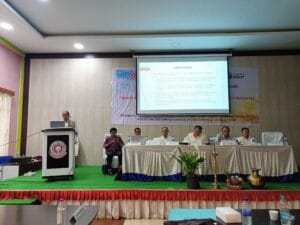
Parallel sessions held at the Political Science department featured robust grassroots-level research on topics like digital nationalism, media freedom, and the socioeconomic impacts of internet shutdowns. Presenters included emerging scholars such as Mathotmi Jajo, Harshit Singh, and Ngasepam Cinthoibi Chanu.
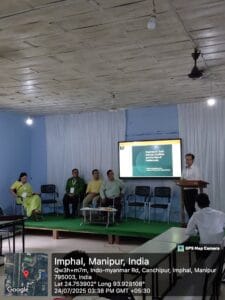
Day Two: Misinformation, Youth Voices, and Peacebuilding
The second day’s sessions is likely to turn sharply toward the dangers of fake news, hate speech, and online radicalization. Senior journalist Pradip Phanjoubam, academics Dr. Homen Thangjam, and Dr. Shahid Siddiqui will underscore how misinformation can escalate ethnic tensions and threaten regional stability, as per the abstracts submitted by them.
Sessions on marginalized voices will see powerful interventions from Kumam Davidson Singh, who will explore queer and marginalized communities’ digital resistance, and Chongtham Peony Devi, who will dissect how women’s bodies became contested sites during the Manipur conflict.
Dr. Mangoljao Maibam will once again critique the Editors Guild of India’s report on Manipur’s ethnic violence, emphasizing the importance of ethical journalism and trauma sensitivity in the digital age.
The concluding sessions will focus on digital peacebuilding efforts. Senior journalist and academics Yumnam Rupachandra Singh, Dr. Bharat Singh, and Prof. Jayenta Singh will present innovative community-led digital initiatives and the potential of AI for inclusive development. Chongtham Gunnamani of Nagaland University will illustrate how Manipur’s digital music albums serve as tools of cultural harmony, quite distinct in his topic choice than other participants.
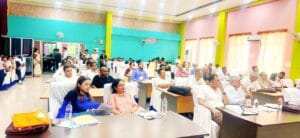
The valedictory function to be chaired by Dr. Khelena Gurumayum, hopes to bring together reflections from participants across India and abroad and end the two-day seminar after summing up the intellectual vibrancy and collaborative spirit of the event.
From the first day onwards, the seminar has successfully highlighted how digital media is both a battleground and a bridge—weaponized to deepen ethnic fault lines, but also leveraged to mobilize peace, amplify marginalized voices, and redefine democratic engagement in Northeast India. As the region continues to navigate its post-conflict realities, the insights from this timely gathering at Manipur University may prove vital for policymakers, civil society, and digital rights advocates alike.