

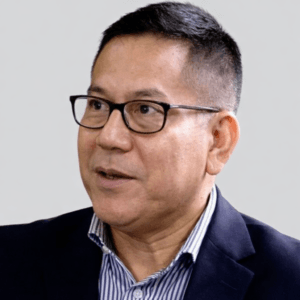
By Brojen Thangjam
“It is not the violence that sets men apart, it is the dignity with which they endure it.”
Primo Levi – Holocaust Survivor
How This Began
This diary began not as a plan, but as a conversation. It was one of the many in the wake of the crisis that unfolded in my home state of Manipur. I ran into an old friend, long separated by our different pursuits. As we spoke—about the years that had passed and the work we had done—he asked, almost casually, why I was not sharing those stories.
For years, I had carried a notebook, a faithful companion whose pages I fed with fragments—names, streets, gestures, passing moments. Those notes were never meant to become a record. They were simply my way of paying attention. What follows is stitched together from small remnants of memory—a tapestry woven from scattered threads.
I devoted close to eighteen years with the United Nations—first as part of national contingents, and later as staff—moving between places marked by prolonged conflict: Kosovo, Sudan, South Sudan, Afghanistan, Iraq, and for a while in the headquarters in New York, supporting missions across different regions. These were not brief encounters. They were experiences shaped by years lived under uncertainty. At the time, I never imagined those experiences would merit sharing. They felt technical, distant, and sealed within a slice of life that ended quietly when I returned home to retire.
That changed when violence came closer—when fear, displacement, and mistrust surfaced not as professional concerns but as lived realities. The scenes unfolding around us felt unsettlingly familiar. The difference was that this time I was not observing from the outside. I was part of it in ways I had never been before. That shift forced a reckoning: what, if anything, had those years taught me?
This diary is an attempt to sit with that question. It offers no theory or prescription, and it makes no claim to authority. These are snippets of what I saw repeated across societies, shaped by encounters with ordinary people whose lives carried the weight of conflict far more heavily than mine ever did.
The thread running through these pages is simple. Conflict is lived at eye level, not headline level. It is shaped by choices forced by circumstance, by interrupted routines, quiet compromises, and moments of dignity under strain. In those lives, I often recognised echoes of ourselves.
But where, and how do I begin? As I struggled with that question, a passage from Alice’s Adventures in Wonderland, read long ago, returned to me. At the trial of the Knave of Hearts, when even the White Rabbit falters over where the story should start, the King offers his blunt instruction: “Begin at the beginning… and go on till you come to the end: then stop.”
So, following the King’s advice, I begin where it began for me—in Prishtina.
Prishtina: A Place Tethered to Memory
My journey with the UN started in Prishtina, Kosovo, some two decades ago as part of the Indian Police Contingent. It was winter when my wife and our young daughter had come to visit me, eager to see where I was living. She was still small then. I remembered her playing in the snow with the landlord’s granddaughter, their little gloved hands shaping snowmen in the courtyard, enjoying the simple fun without knowing what the place had already endured, or what still lay ahead. That image has stayed with me, and it is why Prishtina remains tethered to my memory long after my work there ended.
The village of Gornja Bernica was quiet then, outwardly unchanged, yet already standing at the edge of something larger. It was mixed, though the small Serb presence was thinning. Slava, my landlord, was a simple farmer, increasingly uneasy with the pace of change pressing in around him.
What was unfolding there reflected what was happening across Kosovo: ordinary life under strain, routines disrupted, choices shaped less by preference than by fear. Slava’s unease was not unique. In many small villages, Serb families lived encircled by Albanian settlements. Old friendships endured, but new arrivals were strangers, and the meaning of neighbour quietly shifted. Land prices rose, those leaving sold cheaply, and fear—often unspoken—did the rest.
When two fellow officers and I took up residence in three Serb houses, we did not immediately realise how our presence would alter the village’s rhythm. Slava, my landlord, had kept his tractor hidden for months. Within days, he pulled it out and began working his fields again. His family, once confined indoors, started stepping out with growing ease.
Juliana, Slava’s wife, was small, brisk, and rarely still. Her courtyard was always clean, her clothesline always full. Between chores, she offered tea and warm bread from her oven—gestures made without display.
A few weeks into my stay, she approached with hesitation. “Swiny is OK?” she asked in her broken English. When I said yes, her eyes lit up and her joy was visible. It was her quiet way of confirming that I was not Muslim. In her world, still shaped by war, people fell into simple categories.
That winter, on Christmas Eve, Juliana came knocking urgently. Out in the orchard, she and Slava were struggling to slaughter a pig for the season. I was pulled into the task—asked simply to hold the tail as they worked. The smoked meat lasted for months, and whenever I joined them for a meal, Juliana made sure it was served. In a village shaped by fear and careful distance, this sharing of food became its own reassurance.
When my time in the village came to an end, Juliana’s grief was palpable. Our departure meant that the fragile calm they had found would leave with us. Only then did I begin to understand—perhaps without fully grasping it at the time—that I had been their peacekeeper.
In the later years of my career, I would occasionally ask Kosovar friends and colleagues whether the couple still lived there, but no one seemed to know. Perhaps they remained, adapting quietly; perhaps the slow pressures of change carried them elsewhere.

Between Belief and Belonging
If Slava and Juliana lived on the margins of change, others were negotiating it more visibly. Faik was once a police officer in undivided Yugoslavia. An Albanian, he later joined the Kosovo Police Service and worked with me on recruitment. He carried himself lightly, always with a joke and a cigarette at hand.
It was Ramadan time, and a few colleagues had organised an iftar. Faik came along, laughing that he was starving. “I’m supposed to be a Muslim,” he said, “but I grew up in Yugoslavia. I never saw the inside of a mosque.”
But times were changing. Mosques that had long stood neglected were being repaired. Rituals once set aside were returning quietly to daily life. One afternoon, almost in passing, he told me he had gone to the mosque and prayed with others. “It felt good,” he simply said.
What he seemed to be rediscovering was not doctrine, but a sense of belonging. In a world that had shifted too quickly, faith offered steadiness. For Faik, and for many like him, religion was less about belief than the comfort of being folded into a larger whole.
Between War and Living
In the stories gathered in this diary, I have seen how conflict reshapes the lives of ordinary people. Each searched, in their own way, for safety, reassurance, and dignity amid the debris left behind by wars and conflict. In their grief and quiet resilience, one glimpses the futility of conflicts that we, despite our learning and progress, continue to sustain.
Tom Rodiqi teaches basic computer classes. Before the war, he was a professor of English literature at the University of Pristina. As unrest grew and the university became a site of resistance, it was shut down. Teachers were dismissed, and learning became irrelevant.
Tom believed, as many did, that there would be a place for them in the new Kosovo—that a free country would remember its teachers. It did not. Politics passed into other hands: “men who smuggled eggs and cigarettes” as Tom would disparage. And yet there was a quiet acceptance as he set the computers for the very different discipline he was about to teach. Tom’s story was shaped not only by war, but by a longer inheritance of unresolved history.
The Weight of the Past
These stories unfolded against a larger backdrop. Serbs and Albanians have shared this land for centuries. In quieter times, coexistence endured; in moments of strain, memory hardened and was put to use to justify division. Each community reached back into its past and history for meaning and legitimacy, drawing comfort from narratives that gradually grew narrower and more exclusive.
Kosovo holds deep symbolic weight for Serbs, bound to faith and medieval struggle against the Ottomans. For Albanians, it is home in a different sense—land lived on, worked, and passed down. As empires came and went, borders shifted, faiths changed, and populations moved, what accumulated was not clarity but layered grievance.
Under Yugoslavia, these tensions were held in check for a time. The communist regime under Tito imposed balance but not reconciliation. When it collapsed, old claims returned with force. In Kosovo, history was not merely remembered; it was actively mobilised. The conflict that followed fractured communities that had once lived side by side, as neighbours turned away and fear narrowed choices. NATO’s intervention halted the worst violence, and the United Nations arrived to hold a fragile peace. Yet the deeper work—learning how to live together again—remained unfinished.
Kosovo’s story is not unique. It reminds us how swiftly coexistence can unravel when the past is used to wound rather than to understand—and why so many I met chose quiet retreat over confrontation, not as surrender, but as a way to preserve dignity when the ground beneath them no longer held.
Living With Memory, Without Being Ruled by It
The Balkans remain what they have long been: a meeting ground of faiths, empires, and memories that do not fade easily. In Balkan Ghosts, Robert D. Kaplan describes the place as one where the past never fully withdraws, where older histories continue to press upon the present and quietly shape everyday choices.
Yet the language of crusades and civilizational struggle has gradually yielded to a quieter reality: what now shapes much of the region are protracted negotiations, unfinished reforms, and young people leaving in pursuit of more predictable lives elsewhere. Perhaps this is how places marked by conflict endure.
NEXT Please Read: https://thefrontiermanipur.com/sudan-a-country-that-never-quite-healed/
(Brojen Thangjam recently retired from service with the United Nations. He can be reached at [email protected])