
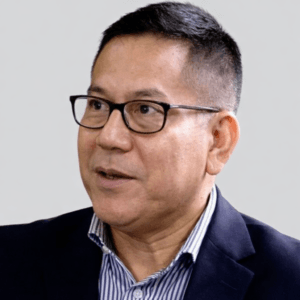
By Brojen Thangjam
“The world is not held together by force alone, but by the restraint of those who could use it.” Vaclav Havel
What Remains Between
After years of writing through specific countries, a set of observations remained that resisted neat placement. They were not tied to any one geography or political cartography, nor did they fit fully within the logic of a single mission. They emerged instead in the spaces in between, becoming clear only with distance.
This section gathers those fragments. They first began to take shape for me not in a library or briefing room, but in conversation during a training course. As colleagues spoke about their postings, it became apparent that many of us, despite different mandates and locations, had been tracing the same invisible geography. It was there, through Africa, that the broader pattern came into view.
The Big Picture — Africa’s Fragile Belt
Sometime in 2014, I attended a course in Dakar, Senegal. As the participants gathered, we went through the familiar ritual of introductions—names, roles, and the missions we had come from. As the list unfolded, a pattern quietly revealed itself. One after another, colleagues spoke of postings that seemed geographically scattered, yet somehow connected.
It was only then that the larger picture came into focus. When I looked at where the United Nations has deployed its largest peacekeeping and political missions in Africa, a clear belt emerged across the middle of the continent—from the western Sahel, through the Central African Republic and the Great Lakes region, to South Sudan and Somalia. Diplomats, scholars, and peacekeepers alike recognise this stretch as Africa’s most fragile corridor: a space where geography, history, resources, and politics converge in volatile ways.
This belt lies along a major transition zone. Ecologically, it marks the shift from the Sahara to the savannah. Socially and economically, it separates pastoral livelihoods from settled agriculture. Culturally, it often sits between predominantly Muslim communities to the north and Christian or traditional belief systems to the south. Organisations such as the International Crisis Group have long observed that such frontiers—where ecosystems and identities overlap—become pressure points. Competition over land and water, grazing routes and farms, or ethnic territories and administrative borders intensifies when state institutions are too weak to mediate. Religion is rarely the root cause, but in insecure environments, it can become a line of mobilisation and mistrust, leading to fissiparous tendencies.
Beneath this ecological and cultural fault line lies another layer of complexity: mineral wealth. Sub-Saharan Africa holds some of the world’s most valuable reserves of cobalt, copper, gold, diamonds, and increasingly, minerals critical to the green transition. In countries with strong institutions, these resources can support paradigm-based development. In fragile states, they often do the opposite.
What turns resources into a problem is not their presence, but how they are controlled. Minerals attract vested interests—armed groups, political elites, smugglers, and external buyers—who profit from disorder and manufactured chaos. The history of so-called “blood diamonds” in West Africa showed how conflict can be financed and prolonged through extraction. When conflict begins to generate income, peace itself can become a threat to those who benefit from it and a conflict economy takes its deep roots and shapes.
To understand why institutions in this belt struggle, one must also look back at colonial legacies. Colonial states in Africa were built primarily for extraction, not governance. In a state of fully operational extractive economy, borders were drawn and redrawn with little regard for ethnic, ecological, or historical realities. At independence, many countries inherited administrative systems that lacked reach, legitimacy, and capacity. Political scientist Pierre Englebert describes this condition as “sovereignty without state capacity”—authority that exists on paper but remains thin on the ground.
Overlaying these structural pressures is leadership. Weak, personalised, or predatory governance can hollow out already fragile states. In Sudan, South Sudan, the Central African Republic, and the Democratic Republic of Congo, similar patterns recur where elites capture institutions, and rule of law erodes. When crises erupt, states lack the resilience to absorb them.
Taken together—geographical fault lines, resource wealth, colonial legacies, and governance failures—these forces explain why so many of Africa’s conflicts cluster in this central belt. The UN’s presence here is not coincidental. It reflects deep structural pressures shaping the continent, and a reminder that conflict rarely has a single cause. More often, it is the convergence of many forces where institutions are least able to hold.
Fault Lines That Endure: Borders, Mandates, and Patience
“And where are you most likely to serve the longest?” someone asked during the training break. Someone responded that he preferred not to move too often. “Then choose a mission monitoring a border dispute,” came the quick reply. “They’re there forever.” It was said lightly, but there was truth in it.
The earliest United Nations peacekeeping missions were created not to resolve borders, but to watch them. The United Nations Truce Supervision Organization (UNTSO), based in Jerusalem and operating across West Asia—known in the Western world as the Middle East—was established in 1948. A year later, the United Nations Military Observer Group (UNMOGIP) followed in India and Pakistan. Both missions remain in place more than seven decades on.
The pattern continued in later decades. In 1964, the United Nations Peacekeeping Force in Cyprus (UNFICYP) was deployed to monitor a dividing line that remains unresolved to this day. A generation later, in 2011, the United Nations Interim Security Force for Abyei (UNISFA) was established to manage a contested strip of land between Sudan and South Sudan.
Together, these missions tell a sobering story: borders may be drawn quickly, but disputes over them endure—and once internationalised, they rarely find easy closure, or even a clear pathway to resolution.
These mandates reveal how deeply rooted such disputes are. For professionals, they may offer continuity and long tenures. For those who live along these lines, however, they mean living with uncertainty—fault lines that can harden or rupture with little warning. The lesson is a simple: land disputes should never be trivialised. Wherever they emerge, they call for restraint, patience, and seriousness from leaders and publics alike because borders, once unsettled, have a way of outlasting generations.
After Libya: When a Buffer Fell Away
Following a course for potential trainers, I found myself on the roster of instructors at the United Nations System Staff College in Turin, Italy, for two consecutive years. The recognition was gratifying, though the preparation was demanding—tight timelines, dense reading, and the pressure of addressing a global classroom. To break the ice, I began each course with a small wager, asking participants to guess my nationality. If they succeeded, lunch was on me. Over two years, I never lost: I seemed, to different groups, to belong everywhere and nowhere at once—placed confidently in Asia, sometimes in Latin America—truly international.
I enjoyed the journeys as much as the teaching. The drive from Naples to Turin, with the Alps unfolding ahead, was unforgettable. Yet beyond these personal satisfactions, I began to notice a quieter change. In Turin and other Italian cities, migrants were becoming more visible—new arrivals with little more than what they carried. Italian colleagues spoke openly of their concern.
The roots of this shift lay further south. The upheavals of the Arab Spring, and in particular the fall of Muammar Gaddafi in 2011, transformed Libya from a tightly controlled state into a fragmented one. Whatever his record, Gaddafi had acted as a gatekeeper on the Mediterranean route. With Libya’s collapse, that barrier fell, opening a major corridor for irregular migration into Europe.
The effects spread wider. Instability in Libya spilled into the West Africa, where armed groups and al-Qaeda–linked movements expanded across weakly governed spaces. The intention of supporting democratic change was well-meaning, even hopeful. Critics, however, have argued that Western support for the Arab Spring, especially under the Obama administration in Libya, lacked deeper understanding of local dynamics. In an April 2016 interview, President Obama acknowledged that his “worst mistake” as president was “probably failing to plan for the day after what I think was the right thing to do in intervening in Libya,” reflecting on the lack of adequate post-conflict planning and strategies after the 2011 intervention.
The consequences continue to shape migration, insecurity, and conflict long after the slogans have faded. In fragile states, decisions made far from the ground can have consequences that last long after the moment of intervention has passed.
Interlude: The Chinese Are Already Here
“Ni hao,” said the Emirates cabin crew as I boarded the Dubai–Khartoum flight. With half the cabin filled with Chinese passengers—and given my own Asian features—the assumption was understandable.
Within months of my arrival in Sudan, their presence became impossible to miss. They were everywhere: on oil rigs, along newly cut roads, and at construction sites. They worked quietly and methodically, often around the clock. The Sudanese, for their part, learned quickly to accommodate them, even when this meant bending long-held cultural sensitivities.
Uncle Wang’s restaurant became something of a refuge. It served alcohol without fuss, and for many Chinese workers it offered a brief escape from isolation. On some evenings, it was not unusual to see them in high spirits, waiting for their buses— some clinging to lamp posts for balance, and momentarily unburdened by the discipline that marked their working lives.
I remember an assessment trip deep into the Kordofan mountains, inspecting a 100-kilometre road linking a remote area to a larger hub. In the middle of nowhere, we spotted a lone Chinese man standing under a desert shrub. We stopped, more curious than concerned, and asked if he needed help. He smiled, waved us on, and returned to his task. A few hundred metres down the road, we found the full operation—machines, workers, and equipment. He was an engineer repairing the very road we were driving on. Years later, when conflict returned to the area, we travelled that same stretch again, moving staff to safety —now fully black-topped and smooth.
I encountered the same quiet efficiency years later in New York. During a tedious online recruitment exercise, two young Chinese interns were assigned to assist. They listened carefully, took notes, and said little. When progress seemed slow, I followed up—only to realise they had quietly redesigned the entire workflow, cutting out half the manual steps. When we let them proceed, they finished in days what usually took weeks.
Watching them over the years, it became clear that China’s edge lies not only in scale or technology, but in a mindset that pairs discipline with curiosity, and respect for systems with a readiness to rethink them. Even where language was once a barrier, they adapted quickly, making practical choices for the future. The results, more often than not, spoke for themselves.
Cape to Cairo — Realising an Imperial Dream
In her book Dead Aid, economist Dambisa Moyo recounts a striking story about the mining entrepreneur Lukas Lundin. In the summer of 2005, Lundin rode his 1,200 cc BMW motorcycle across Africa—from Cairo to Cape Town—covering nearly 12,000 kilometres through ten countries in just over five weeks.
What surprised him was not the distance, but the roads. Nearly 85 per cent of the route was tarred and of a quality he compared to highways in California. Along the way, he repeatedly passed signboards that read: “This road constructed with the grateful assistance of the Government of the People’s Republic of China.” An old imperial ambition—the dream of a continuous Cape-to-Cairo corridor—had been realised, not by European planners and partners, but by a new and unexpected patron.
Moyo’s point is simple and persuasive. Where Western aid often arrived slowly, weighed down by conditions and process, Chinese-backed investment delivered something visible: roads, bridges, connectivity. When citizens can travel thousands of kilometres on fresh asphalt, conclusions form quickly. Infrastructure leaves a memory, an unblurred tangibility. And with it, a quiet shift in perception—away from charity, toward partnership.
On Reverence: In the Presence of Nelson Mandela and Võ Nguyên Giáp
If infrastructure signals capacity, reverence reveals legitimacy. I was part of the security team supporting the Indian Prime Minister’s visit to South Africa for an international conference. In such visits, security and protocol overlap constantly. Plans are rehearsed, drills refined, and movements carefully choreographed to maintain a careful balance—protecting leaders while leaving room for dignity and human connection. Achieving that balance depends less on display than on precision, patience, and a shared sense of what truly matters.
What struck me most, during those preparations, was the reverence South African colleagues held for their President, Nelson Mandela. He was spoken of not as a title, but as Madiba—a name carrying affection, history, and belonging. By then, his health was fragile, and every effort was made to shield him from strain. And yet the refrain was consistent: for the Indian Prime Minister, Madiba would personally receive and see him off. With more than eighty dignitaries attending, this decision complicated already tight schedules. For those managing movements and time windows, it was a logistical nightmare.

When the day arrived, there he was—waiting to receive his guest. There was warmth, laughter, and an ease that seemed untouched by cameras or ceremony. He neither strutted nor sought attention. His presence drew people in quietly, almost effortlessly. Watching him, the word that came to me—unexpected and instinctive—was reverence. It arose naturally.
On another continent, I encountered a different kind of reverence—this time surrounding General Võ Nguyên Giáp, the Vietnamese military commander whose career spanned struggles against French colonial forces, the United States, and later the 1979 Chinese incursion. From Điện Biên Phủ onward, his leadership shaped Vietnam’s modern history.

At Điện Biên Phủ in 1954, Giáp was the Commander-in-Chief of the Vietnamese forces and the principal architect of the campaign that ended French colonial rule in Indochina. It was here that his reputation as a strategist was firmly established through patience, and a deep understanding of the terrain and morale.
During the long war against the United States, Võ Nguyên Giáp remained Vietnam’s senior military leader and chief strategist. The conflict unfolded within a strategic vision he had helped shape—one grounded in protracted struggle and the gradual erosion of a stronger adversary’s will. Victory did not come from decisive battles alone, but from endurance sustained over time.
It was against this history that the Indian Prime Minister later paid him a courtesy call. We gathered in a large convention hall, where officials, media, and delegations exchanged light conversation as we waited. When the General entered, the room fell silent—not by instruction, but instinctively. He was small in stature, his hands frail, yet the presence he carried felt unmistakable. As he spoke, the Vietnamese dignitaries remained standing. No journalist interrupted. His humour surfaced briefly, as he recalled Indira Gandhi with warmth and unguarded admiration. Then he left quietly, without ceremony. Later, a Vietnamese colleague remarked that people in the city would often stop on their own when they saw him pass.
Reverence, I realised, is not created by power. It is earned through sacrifice and authenticity. A true historical icon is not stuck in the past—they represent values, struggles, or achievements that keep speaking to people, no matter the era.
The ancient strategist Sun Tzu, in The Art of War, wrote of harmony between moral purpose, terrain, timing, and leadership. If ever a modern commander embodied those principles—not in abstraction, but in lived experience—it was General Giáp.
In both encounters, continents apart, I saw the same truth: reverence cannot be staged. It appears only when authority has been worn lightly, and responsibility carried fully.
Landscapes of Division and Restraint
Jordan — An Island of Calm
The Indian Prime Minister’s recent visit to Jordan brought back memories of a country I returned to often. For many of us working in Iraq, Amman was the preferred destination for rest and recuperation. Clean, calm, and reassuringly secure, the city offered a pause from the intensity of identified conflict zones.
Jordan’s stability is not accidental; it is carefully and deliberately pursued. Surrounded by crisis—Israel–Palestine, Syria, and Iraq—it has survived through pragmatism: quiet diplomacy, an ability to maintain working relationships with competing global powers, and a clear understanding of its own limits.
The country lacks oil, but it does have significant deposits of phosphate and potash, which make it one of the world’s notable producers of these minerals. Phosphate and potash are used mainly in fertilizers and are among Jordan’s key export goods, reaching markets far beyond the region—including India. These quietly valuable commodities help earn foreign exchange and support the economy without spectacle.
Then there is Petra—a city carved into rock, singular in both scale and preservation. Tourism, anchored in this deep history and managed with restraint, brings Jordan steady revenue and global attention without overwhelming the place itself.
And finally, there is peace itself—not idealistic, but negotiated and pragmatically pursued, maintained through caution and constant adjustment. In a volatile region, Jordan has learned to survive by knowing its limits: avoiding grand or impractical postures, resisting ideological overreach, and choosing steadiness over assertion. This quiet restraint may be its greatest asset.
The Dead Sea — Mud, Memory, and Meaning
The Jordanians have learned to market mud like no one else. A short drive from Amman brings you to the Dead Sea, the lowest point on earth. Visitors float effortlessly in the dense, saline water, coat themselves in mineral-rich mud, and later carry home neatly packaged jars promising beauty, health, and renewal. It is commerce, certainly, but it is also strangely convincing – so much so that I suspect a few bars of Dead Sea soap may still be tucked away at home.
Yet the Dead Sea is more than a spa. In nearby desert caves were discovered the Dead Sea Scrolls—fragile manuscripts that reshaped modern understanding of early Judaism and biblical texts written centuries ago, and still readable today.
What struck me was how easily Jordan holds these elements together. Health tourism, archaeology, faith, and scholarship coexist without display or excess. The Dead Sea offers restoration of the body, while its deeper history speaks quietly to the endurance of ideas. Ideas that have the power of transmission, adaptability, and the capacity to resonate emotionally and ethically.
Few places manage to trade in wellness while remaining so grounded in humility.
Mount Nebo — Looking Across Without Crossing
Not far from Amman stands Mount Nebo, the mountain from which Moses, the biblical liberator who carried the law through fire and faith, is believed to have seen the Promised Land, though tradition holds that he was not allowed to enter it. From the ridge, the land falls away into the Jordan Valley, and on a clear day, the view stretches toward Jerusalem. The setting is sparse, almost austere, and what lingers is a sense of restraint. In a region marked by competing claims and layered sacred and militant geographies, that restraint feels quietly instructive.
Jordan preserves Mount Nebo not as a political statement, but as a place of memory. Pilgrims arrive without ceremony; the view is taken in silence, deriving immense meanings out of the spectacles. The message is subtle but enduring: some legacies are about guidance rather than possession, about bearing witness rather than claiming inheritance. It is a fitting metaphor for the country itself—watchful, cautious, and sustained by balance, choosing endurance over assertion.
Lebanon: A Country Written in Flags
As I come to the end of this diary, I find myself returning to Lebanon for a very specific reason. In the wake of the ongoing crisis in my own home state, Manipur, I watched flags and symbols being raised to mark ethnic and territorial divides. It stirred a memory long held, and brought back with new clarity how Lebanon’s divisions are written not only in history books, but in flags. That recognition stayed with me because Lebanon had once shown me how division becomes visible in everyday life through symbols that define belonging and exclusion. Lifting a flag or splashing a symbol on a wall looks harmless, just another routine. But there is nothing simple about it. These acts are full of constructed imagination about who “we” are and who “we” are not.
Lebanon is a troubled yet beautiful country. It is also a familiar and often preferred destination for United Nations activities in the Middle East or West Asia. Meetings, trainings, and workshops are routinely held here, supported by several UN offices, most notably the United Nations Interim Force in Lebanon. Accessibility, infrastructure, and the ease of Beirut make the city an attractive hub. Beirut, with its late nights and restless energy, often feels like a city that refuses to sleep. Lebanese colleagues carry with them a love for food, style, and conversation—an insistence on living fully, even amid uncertainty.
Yet step outside the conference rooms and cafés, and the country reveals another language altogether—one written not in words, but in symbols placed carefully along the road.
The drive from Naqoura to Beirut—about 110 kilometres, stretched into three unhurried hours—reads like a map of layered allegiances. Leaving the UN compound, villages are marked by yellow banners associated with Hezbollah, signalling one community’s political and territorial presence across the landscape. Further north, flags bearing the cedar announce Christian strongholds. Beyond this, through the Chouf and Aley hills, Druze villages appear—more discreet, tightly knit, and inward-looking. A small but influential community, the Druze have long guarded their autonomy through cohesion, local leadership, and restraint.
These divisions were shaped by history and by unresolved questions of power and representation, too complex to unravel here. In a land where the state has often faltered, flags once offered reassurance and protection. Over time, they hardened into boundaries. Amid recurrent crises, the beauty of the land endures; so too does the cost of fragmentation.
The Shrine — Our Lady of Lebanon
And yet, within this divided country, there exists a shared space of faith that quietly draws people together. I visited the shrine of Our Lady of Lebanon at Harissa a few years ago. Formally a Christian pilgrimage site, it functions in practice as something broader, drawing visitors from across Lebanon’s religious landscape.
What struck me first was its orientation. The figure of the Virgin Mary faces the Mediterranean, her gaze open and outward, overlooking the long sweep of the sea beyond. Locals also tell a story. During one of Lebanon’s many crises—often recalled as part of the civil war years—people believed the Virgin had turned her face away from the sea and toward the land, as if watching over the country in distress. No one presents this as fact. It survives as a legend, offered quietly—less about what happened than about what people needed to believe.
In a country accustomed to reading meaning into symbols, the story endures because it speaks to hope: that someone was paying attention when the state and institutions failed, and violence closed in. Whether the figure ever moved matters less than the comfort people drew from believing that someone, somewhere, was watching over them.
Pilgrims arrive by the winding road above the bay. The open arms of Virgin Mary’s statue and the chapel beneath, draw Catholic Christian pilgrims. But visitors of other faiths come too. I saw Muslims, including women in hijab, offering prayers in silence. The atmosphere is gently ecumenical—votive candles, rosaries, and folded petitions resting side by side. Here, belief briefly softens boundaries, and shared appeals rise above sharper divides.
End Note: What Remains
This diary was never meant to be a catalogue of crises or institutions. It grew instead from human encounters—ordinary people navigating forces far beyond their control, trying to find steadiness amid disruption. If these stories suggest anything, it is not clarity or closure, but the quiet persistence of human resilience: the ability to endure, to adjust, and sometimes simply to hold a line. The world remains complex. I offer no final answers, nor any prescription.
The people I met in service were no different—men and women shaped by circumstance, often guided by instinct. Many were sustained by a simple conviction that suffering should not go unanswered. Humanitarian workers accepted discomfort and danger so others might receive the succour they needed. Soldiers stood watch along uncertain lines, holding together precarious peace. In modest offices, temporary shelters, and places rarely remembered, some paid with their lives. The blue flag, once assumed to confer protection, no longer guarantees safety. When efforts fall short—as they often do—the limits imposed by complexity and constraint deserve acknowledgement alongside judgment.
The winds of change do not blow only through distant places. They reach everywhere, unsettling certainties and testing bonds. What may matter, in the end, is not whether such forces can be mastered, but whether they are met without losing proportion, empathy, or restraint. When I see my daughter at ease in the quiet assurance of her own life, I feel profoundly blessed that she can shape her days on her own terms. Unbidden, memories surface of girls and women I have known—more vulnerable, constrained, and exploited—whose lives allowed far fewer choices. The contrast is uneasy, and it should be.
I close these pages at the end of a long working life. Nearly thirty-five years have passed since I first entered public service, some eighteen spent with the United Nations. Some years unfolded in routine, others in sustained effort to understand. It all moved faster than expected, and it ended while learning still felt unfinished. Returning home brings its own reckoning. It is often the return, not the departure, that tests what remains within us.
(Brojen Thangjam recently retired from service with the United Nations. He can be reached at [email protected])
This literary piece is a classic. I worked with Mr Brojen for 6 years (2016-2012) in the United Nations Assistance Mission in for Iraq (UNAMI). He was Head of the UNDSS Security Training Unit and later became UNAMI Chief Security Officer. Brojen is a complete gentleman, with a good sense of humour. A seasoned administrator, higly experienced, methodical, intelligent, empathic and diligent. He is a mentor that brought out the best out of me, and helped to shape my career path as a United Nations Security Officer. His voluntary resignation left a lacuna. His contribution to subordinate and mission staff development is immense.
I look forward to meeting him again someday.