

… North East India is being caught in a whirlwind that comes unannounced and catching the populations here unaware of a bigger game in geopolitics between two super powers – India and China – over a new concern in environmental politics, the critical minerals ‘warfare’.

By Salam Rajesh
Communist China has set rolling a whole new tension in international relationship amongst super powers with its ‘shut door’ policy on critical minerals essentially required in defense equipment production, electric vehicles, and a host of electronic devices. China controls 90 percent of the global product of critical minerals.
Hit by the Chinese move, which is seen as a direct response to Donald Trump’s shut down policy on economic ties with rival China – a fair resemblance of the cold war tussle between erstwhile Soviet Union and the United States – India is coming up with strategies to meet the deficit in critical minerals for its own home productions.
In between this intriguing narrative, North East India is being caught in a whirlwind that comes unannounced and catching the populations here unaware of a bigger game in geopolitics between two super powers – India and China – over a new concern in environmental politics, the critical minerals ‘warfare’.
Interestingly enough, Samir K Purkayastha writing for The Federal (21 September, 2025) has brought up a conflicting dimension of the narrative where India’s push for infrastructural development via its Act East Policy is seen as thick in the narrative of the critical minerals sourcing diplomacy.
The reference here is with the coming of the railways into the frontiers of the North East, in specific Mizoram and Manipur at the moment, and possibly Assam and Arunachal Pradesh in a future time.
As Samir writes, India’s new rail link to Sairang in Mizoram bordering Myanmar is billed as ‘one of the strategic infrastructure projects’ that could bring it closer to Myanmar’s mineral rich regions.
The Bairabi-Sairang railway line was inaugurated by Prime Minister Narendra Modi on 13 September. This rail link is set to further extend by another 223 km to reach Hmawngbuchhuah, a small town on the India-Myanmar border in Mizoram’s Lawngtlai District.
Samir noted that this unassuming border town would serve as a key junction linking India’s north-eastern region to Myanmar’s Kaladan Multimodal Transit Transport (KMTT) Project via road and rail, and providing India with strategic access to Sittwe Port in Myanmar’s Rakhine State.
The border town of Moreh in Manipur is being developed as a strategic economic corridor with countries in Southeast Asia. Two significant land route passages – the Trans Asian Highway and the Trans Asian Railway – are projected to pass through this economic corridor.
The rail link connectivity from Silchar in lower Assam and passing through Jiribam to reach Imphal is projected to become operational by 2027. In its later phase, the rail link would pass through Moreh and onto Myanmar. This rail link could potentially provide easier access to Kachin State’s rare-earth element producing mines.
Myanmar’s Kachin State is reported to be active in mining operations primarily focused on heavy rare earth elements, particularly dysprosium and terbium.
India had also been considering the reopening of the Second World War era Stilwell Road, stretching from Ledo in Assam and passing through the Pangsau Pass in Arunachal Pradesh and thence onto Myanmar, and south China.
The route passes through Myitkyina and Bhamo in Kachin State, before continuing further on to Yunnan Province in China. Samir noted that Ledo is connected by a railhead, and the distance between Ledo and Bhamo is around 620 km only.
Sudhi Ranjan Sen reporting for the Bloomberg, and reproduced in The Economic Times (20 September, 2025) writes that India is considering setting up a strategic reserve of critical minerals for ‘emergency use’ in defence manufacturing, a step necessitated by the Chinese curb on exports of the Rare Earth Elements (REEs).
This is the first time India has made public its plans to set up such a strategic reserve, Sen says. Key military hardware such as missiles, aircraft, radars and warships all require critical minerals, and shortages can have a crippling effect on defence preparedness, Sen writes.
Meanwhile, the Business Standard reported that the Government of India is in the final stages of launching an INR 7350 crore scheme to spur domestic production of Rare Earth Permanent Magnets (REPMs) and cut import dependence.
This development comes after China imposed restrictions on exports of REPMs in April earlier this year, squeezing supplies to India’s automobile and electronics industries, the report stated.
The move, anticipated as the Scheme to Promote Sintered Rare Earth Permanent Magnet Manufacturing in India, aims in establishing a fully indigenous manufacturing ecosystem with an annual production capacity of up to 6000 tons, according to the report.
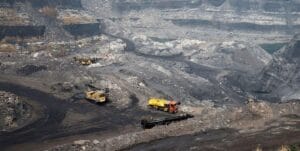
Earlier this month, India decided to treat rare earth mines as ‘strategic projects’, a classification which would significantly reduce procedures and ensure faster environmental clearances, easing rare-earth mining.
Dhiraj Nayyar, chief economist with the corporate Vedanta Limited was quoted by The Indian Express (20 June, 2025) saying that, “It is time to emulate America’s policies and fast track the exploration of critical minerals. India remains under-explored for all minerals. This state of affairs is no longer an option, especially if India is to become a serious player in manufacturing. It is near-impossible to secure mineral supply chains from overseas, even the US is struggling. As a country that is geologically rich, India must explore within”.
India’s Hindustan Zinc, a subsidiary of Vedanta Limited, is reported to be contemplating to mine and process neodymium, a rare earth used in permanent magnets. The company is cited as one of the world’s largest producers of zinc, silver and lead.
This brings into focus mineral rich regions in the country, such as Ladakh and the North East, in the scheme of things. The Government of India had identified several areas in the North East region as relatively rich in critical and strategic minerals important for clean energy transition, digital infrastructure and defense manufacturing, as per studies and explorations done by the Geological Survey of India (GSI).
Quoting the National Mineral Exploration Trust (NMET) source, the North East region is reportedly rich in rare earth elements (REEs), graphite, vanadium, lithium, cobalt and others needed for making batteries, semiconductors and advanced alloys.
The GSI report contended that ‘India’s growing demand for such resources underscores the need to identify and develop domestic sources, particularly in geologically promising regions such as the North East’.
In neighboring Myanmar, the majority of rare-earth mining sites are concentrated around Chipwe and Pangwa, a region located near the China border, approximately 125 km northeast of Myitkyina, the capital of Kachin. Additional mining activity also occurs in Nhkawng Pa, a mountainous area in the state’s Bhamo district, which borders China.
The Kachin Independence Army (KIA), a powerful armed rebel group based in Myanmar, is reported to have showed interest in exploring the potential for bulk rare-earth exports to India. It reportedly started procuring samples as sought by India to assess the quality and volume of heavy rare earths for cost-feasibility studies.
According to reports, the Indian Ministry of Mines in June earlier this year had tasked the Indian Rare Earths Ltd, a Mumbai-based public sector enterprise, and Hyderabad’s Midwest Advanced Materials Pvt Ltd, with assessing the viability of sourcing and transporting rare-earth samples from the mining sites in Kachin, which are currently under the control of the KIA.
The plan, however, faced setback after Myanmar’s military regime intensified its counter offensive in Kachin State, targeting rare earth and jade hubs controlled by the KIA, according to sources.
While China recently eased its rare-earths controls, Beijing’s earlier weaponization of its market dominance had spurred Western companies to look for alternative suppliers. India’s cabinet approved an INR 1500 crore incentive program to boost recycling of critical minerals from batteries and e-waste, stepping up efforts to secure access and supplies of rare earths, according to Bloomberg News.
Interesting enough, according to a report of the US-based Stimson Center, a proposal was advocated by the US government to engage with the military-led State Administration Council in Myanmar which has been governing the country since the February 2021 military coup overthrowing Suu Kyi’s democratic government, while another proposal recommended direct negotiations with the KIA.
Sen reported that the linkage to Kachin assumes importance amid a growing geopolitical interest in its rare earth reserves. While China seeks to maintain its dominance over the supply chain, India and the US are also targeting these deposits to reduce their reliance on minerals controlled by Beijing. Trade data from last year showed that nearly 57 percent of China’s rare earth element imports originated from Myanmar, according to Sen.
Rare-earth elements encompass a group of 17 metals, including lanthanides, scandium and yttrium which are essential for manufacturing high-performance magnets, EV batteries, wind turbines, and various electronic devices.
Heavy rare-earth elements, particularly dysprosium and terbium, are essential for the production of high-strength permanent magnets used in technologies such as EVs and wind turbines, and various defense hardware including missiles.
For the North East, a region already besieged with a host of damaging socio-environmental concerns including mega dams, infrastructural buildups, commercial oil palms, illegal poppy cultivation and drugs manufacturing, oil and natural gas exploration, and mining of basic minerals, the mining of critical minerals in large quantity, which would require digging deep into the earth, could usher in a whole new dimension of environmental hazard within the fragile Eastern Himalayan geo-ecological landscape.