

How cane toads, paragrass, carp and hyacinth became ecological disruptors in Australia and Manipur.

By Salam Rajesh
Earlier this month, Jennifer Geer writing for A-Z Animal.com, provided a descriptive narrative of how an imported and introduced toad species from Hawaii by the Australian Government ultimately became the proverbial Frankenstein in the making.
In 1935, Queensland in Australia faced a major crisis in its sugar cane crop production after a native beetle species, Greyback Cane Beetle (Dermolepida albohirtum), commenced wreaking havoc on the sugarcane plants.
The beetle larvae lived in the soil and chewed on sugarcane roots, stunting growth or killing the plants. This incurred major economic losses for the sugarcane farmers. There was a need to find a solution fast enough to prevent further losses.
Seeking a natural solution to kill the grubs, the Australian government imported Cane Toads (Rhinella marina) from Hawaii, with the hope that the toads would eat the grubs and save the sugarcane.
Unfortunately enough, as history proved, the worst-case scenario occurred. The toads did not keep the beetle populations in check. Instead, they became one of Australia’s most destructive (alien) invasive species and an ecological disaster, writes Geer. Today, the toads are considered invasive species in Australia, the Caribbean Islands, Hawaii, and Florida.
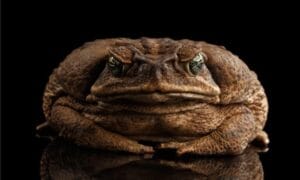
In August 1935, the BSES (Queensland Bureau of Sugar Experiment Stations) released 2400 cane toads into sugarcane plantations in Gordonvale, North Queensland. By 1950, the Australian government declared the cane toad an invasive predator.
Dangers from the toads included poisoning animals that prey on them, outcompeting native species for resources, and their voracious appetites. Geer writes that 75 species of Australian crocodiles, lizards, and freshwater turtles were threatened by the toads.
Some of the animals that are in danger of dying after they eat a cane toad include the Australian monitor lizards, quolls, tiger snakes, and freshwater crocodiles. Many of these animals are designated as threatened species in the country.
This story fairly well finds reflection in India, too, with stories of introduced species ultimately becoming monsters in disguise. Like most States in the country, Manipur too is not an exception to such stories of disasters.
In the mid 1970s, the State’s veterinary department reportedly introduced Paragrass (Brachiaria mutica) as fodder for milch cows that, too, were imported from Haryana. It was reported that the cows were housed in a mechanized cattle farm in the Iroishemba area in Imphal West District.
The remains of the feed, that is, the undigested or the uneaten parts of the paragrass soon found their way to the riverbank of Nambul River via its feeder rivulets, either as cow excreta or intentionally dumped as waste. Today, paragrass is one of the major nuisance semi-aquatic plants in most water bodies within the Manipur River basin.
Paragrass (Napi tujombi in the vernacular) is a major headache for Loktak Lake (a Ramsar site) managers as this fast spreading grass had virtually spread its tentacles across the peripheral shoreline, crowded over the floating biomass Phumdi, and literally had become the major reason for depletion of native plants, in particular the edible aquatic, semi-aquatic and semi-terrestrial species of food and medicinal values.
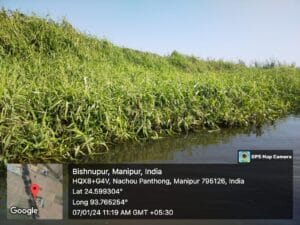
The story of the notorious cane toads of Australia indeed finds a parallel with the notorious paragrass in Manipur, well defined amongst the floating biomass of Loktak Lake. The one is a story of an animal (an amphibian) and the other is of a plant (a grass). Amazing comparison at the best!
It may be recalled here that Target 6 of the Global Biodiversity Framework (GBF) of the Convention on Biological Diversity (CBD) re-emphasizes the elimination, minimization, reduction or the mitigation of impacts of Invasive Alien Species (IAS) of plants and animals on the biodiversity and ecosystems across the seven continents.
The GBF’s Target 6 specifically seeks the prevention of the introduction and establishment of priority invasive alien species, reducing the rates of introduction and establishment of other known, or potential, IAS plants and animals by at least 50 percent by the target year 2030.
For the Asia and the Pacific CBD Regional Group, 37 member countries including India have set at least one national target to be achieved by year 2030.
On this end, the National Biodiversity Authority of India (NBA) in 2022 had framed lists of invasive alien species of plants and animals under its Inland Invasive Alien Species of Fishes of India that are of priority for control, reduction and elimination throughout the country by year 2030.
Top on the list of the Inland Invasive Alien Species of Fishes of India according to the NBA is one of the commonest cultured fishes in the country, and in Manipur too, and that is, the Common Carp (Eurasian or European carp, Cyprinus carpio; Puklaobi in the vernacular).
The Common Carp was introduced in Manipur way back in 1964 according to fish expert Professor Waikhom Vishwanath. Interestingly, in India the fish was first introduced in Cuttack in 1939, and in Bangkok in 1957. The fish’s native range covers rivers in Europe and in Asia.
The fish Mozambique tilapia (Oreochromis mossambicus; Tunghanbi in the vernacular) a species originating from East Africa and introduced in India in 1952, finds itself second in the priority list of invasive alien species of fishes to be either controlled or eradicated entirely in India by the target year 2030.
Two very commonly seen aquatic plants in Manipur, namely, Pontederia crassipes (Eichhornia crassipes/Water hyacinth; Kabo-kang) and Alligator weed (Alternanthera philoxeroides; Kabo-napi) find themselves listed on the top of the priority IAS plants to be either controlled or eradicated completely by 2030.
The proliferation of Pontederia crassipes in large number across the water body of a wetland endangers it as excessive growth of the plant ‘inhibits the growth of fish and other aquatic organisms due to cut down of light and lack of oxygen’ according to experts.
In fact, at one point of time the plant was known as the ‘Terror of Bengal’ because of its rapid growth and domination across most water bodies in that State, rapidly affecting the fisheries and impacting rural economy drastically.
The Dehradun-based Wildlife Institute of India (WII) at one point of time had noted that ‘the gregarious growth of weeds like Brachiaria mutica and Alternanthera philoxeroides unless controlled, may pose a great threat to the biodiversity of the Keibul Lamjao National Park – habitat of the highly threatened Manipur Brow-antlered Deer’.
Defining Invasive Alien Species, Costello et al. (2022) says, “Alien species are organisms which are introduced to regions in which they would not be found naturally, as a result of unintentional or deliberate human action”.
“In the majority of cases, alien species are unable to survive in their new environment without human support. However, a small proportion will manage to adapt to their new surroundings and establish populations in the wild. Some of these alien species have negative impacts on the environment, for example predation or competition for resources with native animals or plants”.