

In Asia, forest area increased from 582 million ha in 1990 to 630 million ha in 2025, out of which forest in protected areas (PAs) rose from 100 million ha in 1990 to 154 million ha in 2025.

By Salam Rajesh
The world’s forest growing stock, biomass and carbon have substantially increased, according to the Food & Agricultural Organization (FAO) of the United Nations. The world’s forest growing stock in 2025 is estimated at 630 billion m3, which is an average of 152 m3 per ha.
Approximately one-third of the growing stock is in primary forests. Following declines in the 1990s, the world’s forest growing stock, biomass and carbon all increased after 2000, with the growth rate accelerating over time, reads FAO’s latest report Global Forest Resources Assessment 2025 (FRA 2025, https://doi.org/10.4060/cd6709en).
In Asia, forest area increased from 582 million ha in 1990 to 630 million ha in 2025, out of which forest in protected areas (PAs) rose from 100 million ha in 1990 to 154 million ha in 2025.
FRA 2025 examines the status of, and trends in, around 50 broad variables in the period 1990 to 2025. The backbone of the assessment is data reported through standardized country reports, compiled by officially nominated national correspondents through online platform.
Each report contains 22 reporting tables on seven topics, namely, (1) forest extent, characteristics and changes; (2) growing stock, biomass and carbon; (3) forest designation and management; (4) forest ownership and management rights; (5) forest disturbances; (6) policies and legislation; and (7) non-wood forest products.
The report emphasized that forests cover more than 4 billion hectares globally, nearly half of which is in the tropics. The world has a total forest area of 4.14 billion hectares, which is close to one-third (32 percent) of the global land area and equivalent to 0.50 ha of forest per person, according to the FAO report.
The tropical domain has the largest proportion of the world’s forests (45 percent), followed by the boreal, temperate and subtropical domains. Of the regions, Europe has the largest forest area, accounting for 25 percent of the world’s total. South America has the highest proportion of forest, at 49 percent of the total land area.
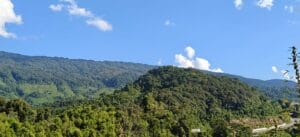
Interestingly, the report says that more than half (54 percent) of the world’s forests is in only five countries – the Russian Federation, Brazil, Canada, the United States of America and China (in descending order by area).
The net loss of forest area has been reduced by more than half since the 1990s, with the annual rate of net forest loss falling from 10.7 million ha during 1990-2000 to 4.12 million ha during the decade from 2015 to 2025. This was the result of reduced deforestation in some countries and the expansion of forest area in others, the report noted.
At the same time, the report stressed that deforestation in general continued to decline where an estimated 489 million ha of forest was lost worldwide through deforestation since 1990, but this rate of loss has gradually slowed.
The deforestation rate was estimated at 10.9 million ha per year during the decade from 2015 to 2025, down from 13.6 million ha per year during the years from 2000 to 2015, and 17.6 million ha per during the years from 1990 to 2000, according to FAO.
The environmental values of forests are assessed through three sub-indicators that measure change in forest area (“annual forest area change rate”), biomass stock in forests (“aboveground biomass in forest”), and efforts to protect biodiversity and other natural and cultural resources (“proportion of forest area within legally established protected areas”).
The sub-indicators for achieving the Sustainable Development Goal 15.2.1 indicate the progress towards sustainable forest management including annual forest area change rate, aboveground biomass in forest, proportion of forest area within legally established protected areas, proportion of forest area with long-term forest management plans, and forest area under independently verified forest management certification schemes.
A comprehensive global indicator framework, consisting of 232 indicators, was established in March 2017 to monitor progress. These global goals are designed to steer the actions of the international community between 2016 and 2030.
FAO’s Director-General Qu Dongyu notes that the FRAs – produced every five years – are the most comprehensive and transparent global evaluations of the state, management, and uses of forest resources, covering all the thematic elements of sustainable forest management.
Forests are crucial for achieving many of the SDGs, particularly SDG 15 (life on land), which highlights their importance for the sustainability of terrestrial ecosystems, and SDG13 (climate action).
It may be recalled that 193 Member States of the United Nations adopted 17 Sustainable Development Goals (SDGs) in September 2015 as part of the UN’s 2030 Agenda for Sustainable Development.
The general emphasis is that covering about one-third of the Earth’s land surface, forests are crucial for sustaining biological diversity, food security, livelihoods, renewable biomaterials and energy, and for regulating the climate.
The scope and processes of the FRAs reflect recent developments in international forest policy, such as the 2030 Agenda for Sustainable Development, the United Nations Strategic Plan for Forests 2017–2030 (UNSPF), the Paris Agreement on climate change, and the recently adopted Kunming–Montreal Global Biodiversity Framework (KM-GBF).